
Clothing Manufacturing Contract Checklist for Brand Costs

The deposit isn’t the only contract term that can put a brand’s cash at risk. A practical clothing manufacturing contract checklist should define the minimum order, deposit, payment milestones, quality standards, delivery dates, and shipping responsibilities. A 30% deposit is a typical starting payment, with the remaining 70% usually due against a shipping document or after final inspection passes.
It’s easy to focus on unit price and overlook the terms that determine when payments are due, what makes a garment acceptable, and who handles freight. Clear wording helps both parties follow the same production plan and reduces uncertainty from sample approval through delivery.
This clothing manufacturing contract checklist explains how to set out deposits and milestone payments, minimum order quantities, product specifications, quality standards, delivery dates, and shipping documents. It shows which terms to make precise, how to link payments to production milestones, and how to assign responsibilities so the agreement reflects how the order will run.
Table of Contents
Deposits and milestone-based payments
A 30% deposit is a typical starting payment for clothing production, with the remaining 70% usually due against a shipping document or after final inspection passes. In the agreement, connect each payment to a named milestone, so brands know what triggers an invoice and when funds are due.
Set the deposit amount and due date. State whether the deposit is due when the order is confirmed, and identify the payment method and currency.
Break the balance into milestones. For example, tie a payment to sample approval or production completion, then make the final balance payable after inspection or against the shipping document.
Define the inspection trigger. For a significant order, specify whether a pre-shipment AQL inspection must pass before the balance is released.
Record the full price and adjustment rules. List the agreed order pricing and explain which changes, such as approved fabric substitutions, can adjust the total and how both parties approve the adjustment.
Set a cost cap or written approval process. State that extra charges require written approval before work proceeds, reducing payment disputes over unapproved materials or production changes.
Link payment to delivery and quality with objective terms: name the required documents, inspection result, and due date. A formal agreement should also state how invoicing works, what happens after late payment, and how delays affect a milestone. Avoid paying 100% upfront by wire transfer; a staged schedule connects each payment to a defined step.
For U.S. apparel orders, assign responsibility for applicable labor, safety, environmental, labeling, and product-compliance requirements, including required certifications. State who owns designs, tech packs, patterns, labels, and other intellectual property, and whether either party may use these materials beyond the order.
For fabric sourcing, specify the fabric type and approved suppliers, and require written approval before any substitution. Record material specifications and how supplier changes are tracked so the agreed fabric and source remain clear throughout production.
Quality benchmarks and acceptable defect rates
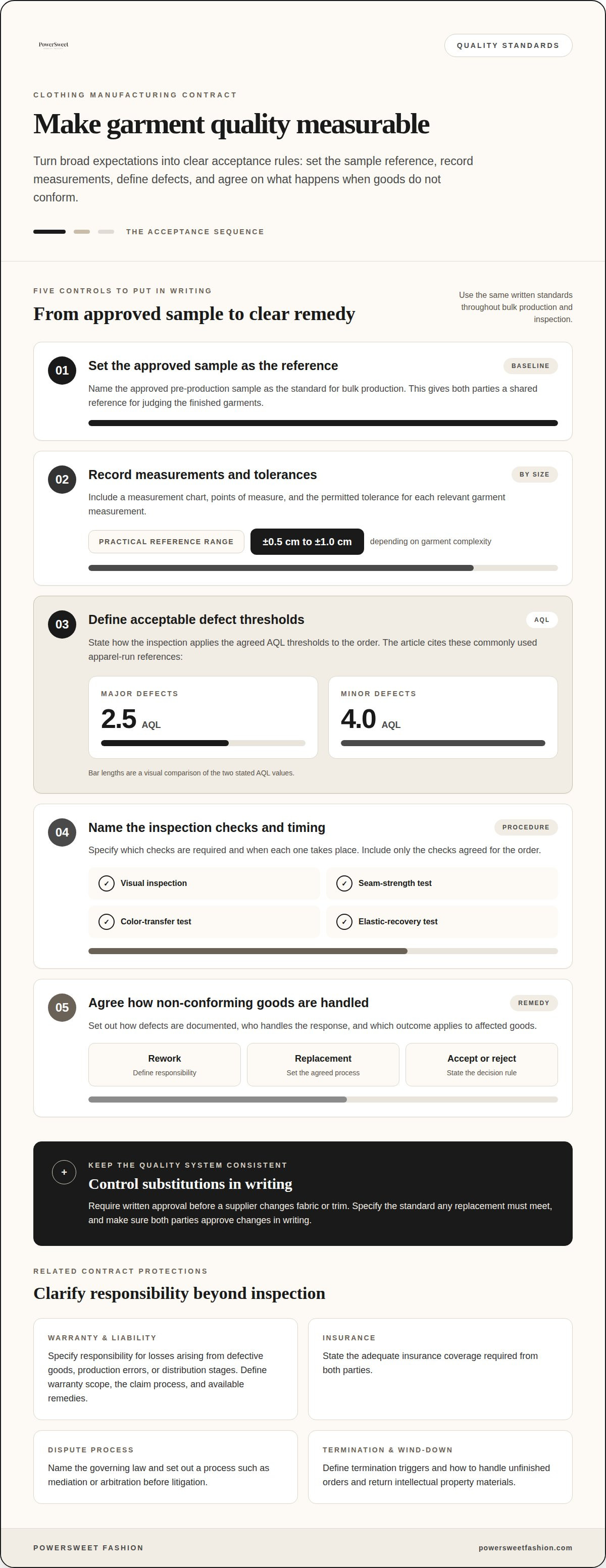
A quality clause turns “good workmanship” into measurable acceptance criteria. Use the approved pre-production sample as the reference for bulk production, then define garment measurements, tolerances, defect categories, and inspection procedures in the agreement.
Set AQL thresholds. Apparel runs commonly use 2.5 AQL for major defects and 4.0 AQL for minor defects; define how the inspection applies those thresholds to the order.
Record measurements by size. Include a measurement chart and point-of-measure tolerances. A practical reference range is ±0.5 cm to ±1.0 cm, depending on garment complexity.
Name the checks. Specify visual inspection and any required seam-strength, color-transfer, or elastic-recovery tests, along with when each check occurs.
Set remedies for non-conforming goods. State how defects are documented, who handles rework or replacement, and whether affected goods can be accepted, corrected, or rejected.
Include sourcing and substitutions in the same quality system. For example, require written approval before a supplier changes a trim or fabric, and specify the standard any replacement must meet. Verbal promises should not override the signed clause: require both parties to approve changes in writing.
For warranties, indemnities, and product liability, specify which party is responsible for losses arising from defective goods, production errors, or distribution stages, and require adequate insurance coverage from both parties. Define the warranty’s scope, claim process, and available remedy in the contract.
For disputes, name the governing law and set out a process such as mediation or arbitration before litigation. Include termination triggers and wind-down steps, including how to handle unfinished orders and return intellectual property materials.
Clear inspection procedures make quality control more actionable. Quality control services can support agreed checks against the sample and specifications during production.
Delivery dates, freight responsibilities, and shipping documents
A production calendar should connect quantity, sample approval, factory completion, inspection, and handoff to the carrier. The estimated overseas production lead time is 8 to 12 weeks, and ocean freight from overseas adds a 30-day lag. Put the required arrival date in the agreement, not only the factory dispatch date, so the timeline accounts for shipping.
Record the order quantity and delivery deadline. Match the purchase order to the number of garments, size breakdown, colourways, and required delivery date so both parties work from one order record.
Define when lead time starts. State whether the production clock begins after sample approval, material availability, or another agreed milestone, because an unclear start date can create disputes.
Set delay rules. Distinguish accountable delays from force majeure events and define notice, revised dates, and remedies for each situation.
Specify late and incorrect-order remedies. The contract can state penalties for late delivery or incorrect quantities; a listed example is a 1% late fee per week of delay.
Assign freight responsibilities. Name the party arranging transport, paying freight, and managing the handoff, and state the shipping term. FOB China port is the manufacturer’s standard shipping term.
Specify the delivery point. “Ready to ship” and “delivered to the named destination” are different milestones, so define which date controls and who is responsible at each stage. If fabric arrives late, explain how the production calendar changes and how the revised schedule will be documented.
List required shipping documents in the agreement, including proof of dispatch and records needed to receive the order. Assign each document to a responsible party and delivery milestone. Set a written process for reporting shortages, damaged cartons, or a garment count that differs from the purchase order. A dated inspection record can document the quantity checked and any exceptions before shipment.
Finally, state which document takes precedence if the agreement, purchase order, production calendar, and later written changes conflict. This order of precedence keeps approved quantities, delivery dates, and shipping instructions aligned throughout production.
Minimum order quantities and deposits
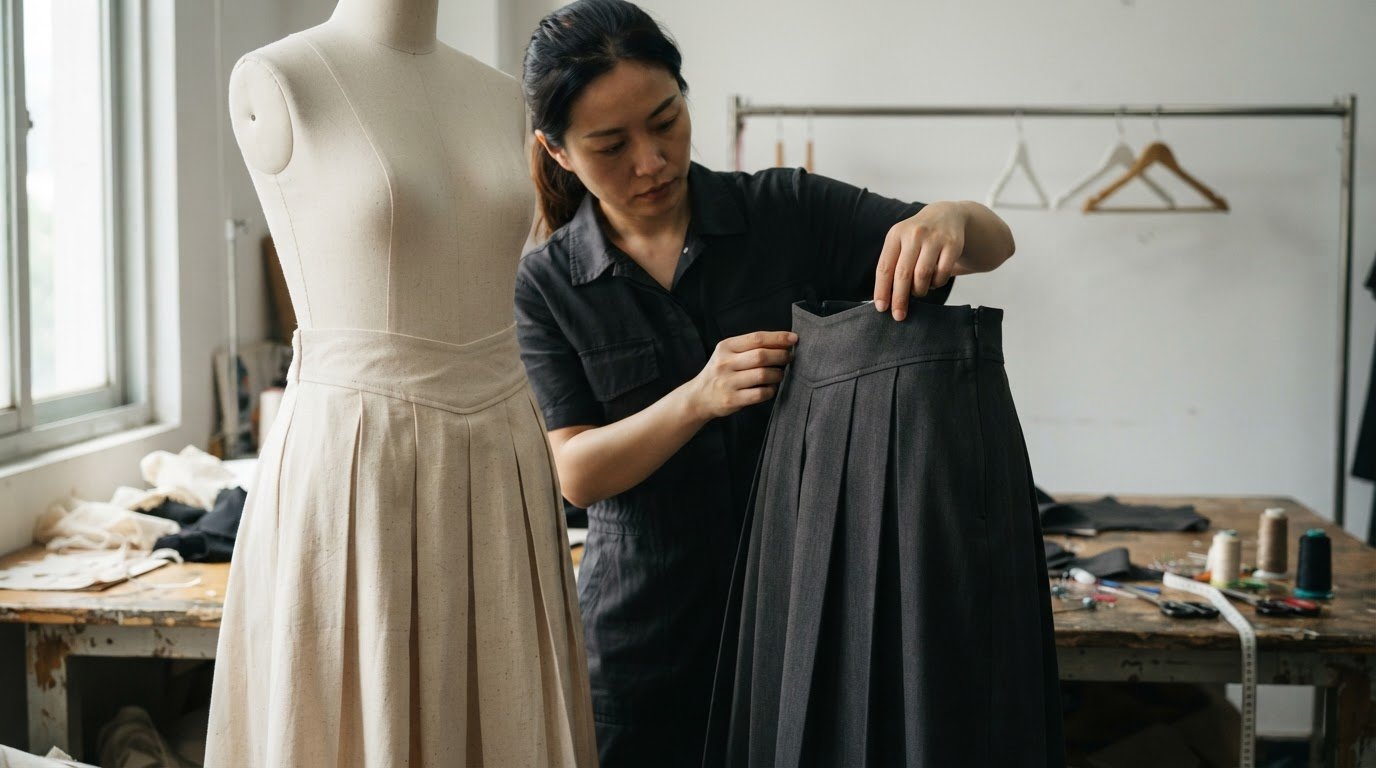
Set the minimum order quantity (MOQ) by the unit the parties will actually produce. The stated minimum is 100 pieces per colour. The agreement should say whether that quantity applies separately to each colour and how the order’s sizes and styles count toward it. This structure helps brands estimate inventory before confirming an apparel run.
Define the MOQ basis. Record the quantity per colour, style, and shipment, then show the size breakdown in the purchase order. This prevents a total order count from obscuring a shortfall in one colour.
Separate the sample from bulk quantities. Identify the approved sample as the production reference and state when bulk quantities become binding. Sample approval should lock the design and specifications used for production.
Set the deposit trigger. Specify the deposit amount, due date, payment method, and whether payment is due at order confirmation or another milestone. Tie the trigger to a clear event, not an informal conversation.
Explain how quantity changes affect payment. State how additions or reductions change the order total, deposit balance, and production schedule. Require written approval before revised quantities move into production.
Define cancellation and shortfall handling. Explain how the parties account for committed fabric or work already completed if an order changes or stops. Set a process for documenting any quantity difference before shipment.
For example, an order with several colours should list each colour’s quantity rather than giving only one combined total. That detail lets both parties see whether the 100-piece minimum is met for each colour and how the size mix fits the order. Match the signed agreement, sample reference, and purchase order so the approved apparel run has one clear structure.
Use plan your sample and order structure to align quantities and approval steps before production begins.
PowerSweet Fashion: Custom Women's Clothing Production
PowerSweet Fashion supports emerging brands with custom women's clothing production, from early product development through finished garments. Turn to the team when you need to connect a workable production plan with clear specifications, order quantities, quality expectations, and delivery terms.
Sample Development helps translate a design into a sample for review before bulk production. Samples are ready in 10 days, and bulk production takes 15-20 days. Fabric Sourcing and Quality Control Services support material selection and checks against the agreed product requirements, helping keep the sample, production details, and quality expectations aligned.
Share your designs, target quantities, fabric preferences, and key contract requirements to start a focused production discussion. Contact PowerSweet Fashion to discuss your clothing production needs.
Move from contract terms to a clear production plan
Use your clothing manufacturing contract checklist as a working document, not a formality to file away. Next, align the written terms with the decisions shaping your order, from design direction and materials to sample approval. This gives both parties a clear starting point for production discussions.
PowerSweet Fashion provides custom women’s clothing production, sample development, and fabric sourcing. These services help brands turn a defined product brief into a production-ready plan, with contract terms guiding the work from the outset.
Bring your draft terms and project requirements into the conversation. Contact PowerSweet Fashion to discuss your contract and the production needs behind it. A clear next step can help you move forward with focus and confidence.
Frequently Asked Questions
How Do You Write a Clothing Manufacturer Contract Step by Step?
Start by identifying the buyer, manufacturer, garments, and documents covered by the agreement. Record product requirements, order quantities, payment triggers, approval processes, delivery responsibilities, and remedies for problems. Specify which written document takes precedence if terms conflict. A clothing manufacturing contract checklist can help organize these decisions, but have a qualified legal professional review the final agreement before signing.
How to create a garment manufacturing agreement?
Build the agreement around one specific order and its approved product information. Attach or identify the tech pack, artwork, sample reference, size breakdown, and purchase order, then explain how revisions become binding. Include confidentiality, intellectual property ownership, dispute handling, and termination terms. For example, specify whether a revised label design needs written approval before it is used in production.
What Should You Look for in a Factory Agreement?
Look for terms that turn expectations into clear responsibilities: who approves design changes, who supplies each material, and how production records are shared. Name the people authorized to approve changes and explain how written amendments are recorded. Review the confidentiality, ownership, liability, and termination clauses too. These details matter if a brand changes direction or pauses a collection.
What does a fashion startup need to know about manufacturer contracts in 2026?
In 2026, a fashion startup should treat the manufacturing agreement as both a commercial document and an operating plan. Make sure its terms match the current tech pack, order plan, approval workflow, and shipping arrangement. Keep signed changes with the original agreement so the production team has a consistent record. Have a legal professional review governing law, compliance responsibilities, and dispute terms.
Which Clothing Production Agreement Red Flags Should You Avoid?
Avoid vague phrases such as “standard quality” or “delivery as agreed” without measurable criteria and a dated schedule. Other warning signs include blank fields, conflicting order documents, undocumented verbal changes, unclear ownership, and payment demands without defined milestones. If the contract gives one party broad discretion to change materials or specifications, clarify the approval process before signing or authorizing production.
Why Do Most First-Time Factory Deals Fail?
First-time factory arrangements can break down when a brand’s expectations remain in messages or conversations instead of the signed order documents. A design image alone may not explain construction details, and an informal change can leave the factory and buyer working from different versions. Keep a shared record of approved specifications, decisions, and revisions, and assign one representative to communicate each formal change.
Comments