
Clothing Manufacturing for Fashion Startups, From Design to Construction

A large first order isn’t the only route to a production-ready collection. A clothing manufacturer for fashion startups can make a smaller launch more workable when minimums, style count, fabric choices, and sample development align with the budget. One manufacturer may set a 500-unit minimum per style, while small-batch production can help reduce the risk of surplus inventory.
It’s understandable to worry that manufacturing will demand more cash and commitment than a new brand can manage. The key is to understand what drives order size and production planning before moving from concept to construction, so you can make informed trade-offs without losing sight of quality or launch goals.
This guide explains how design support and pattern making shape a garment, how sourcing and ethical production factor into the decision, and how minimum order quantities affect a startup’s budget. You’ll also learn what to consider when comparing production options and planning a practical next step.
Table of Contents
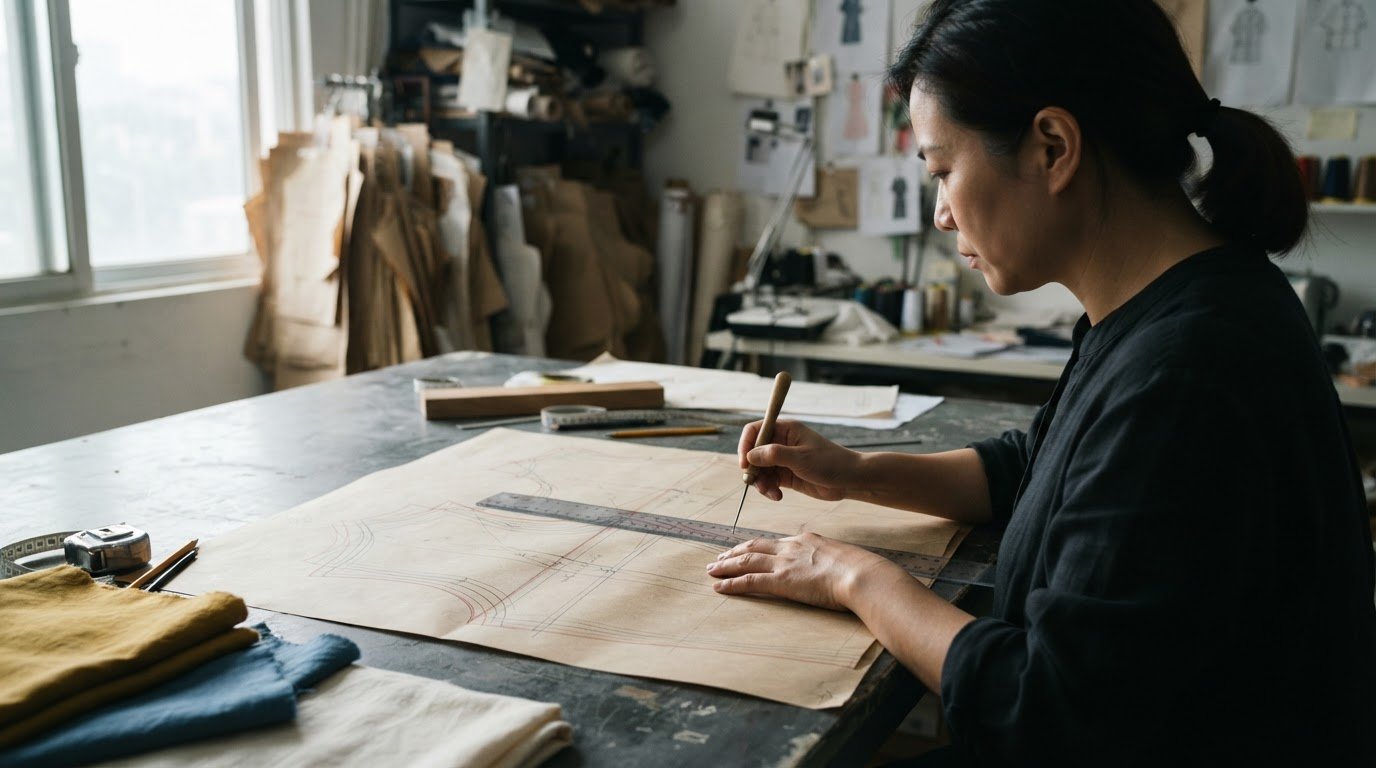
Design consultation, pattern making, and garment construction
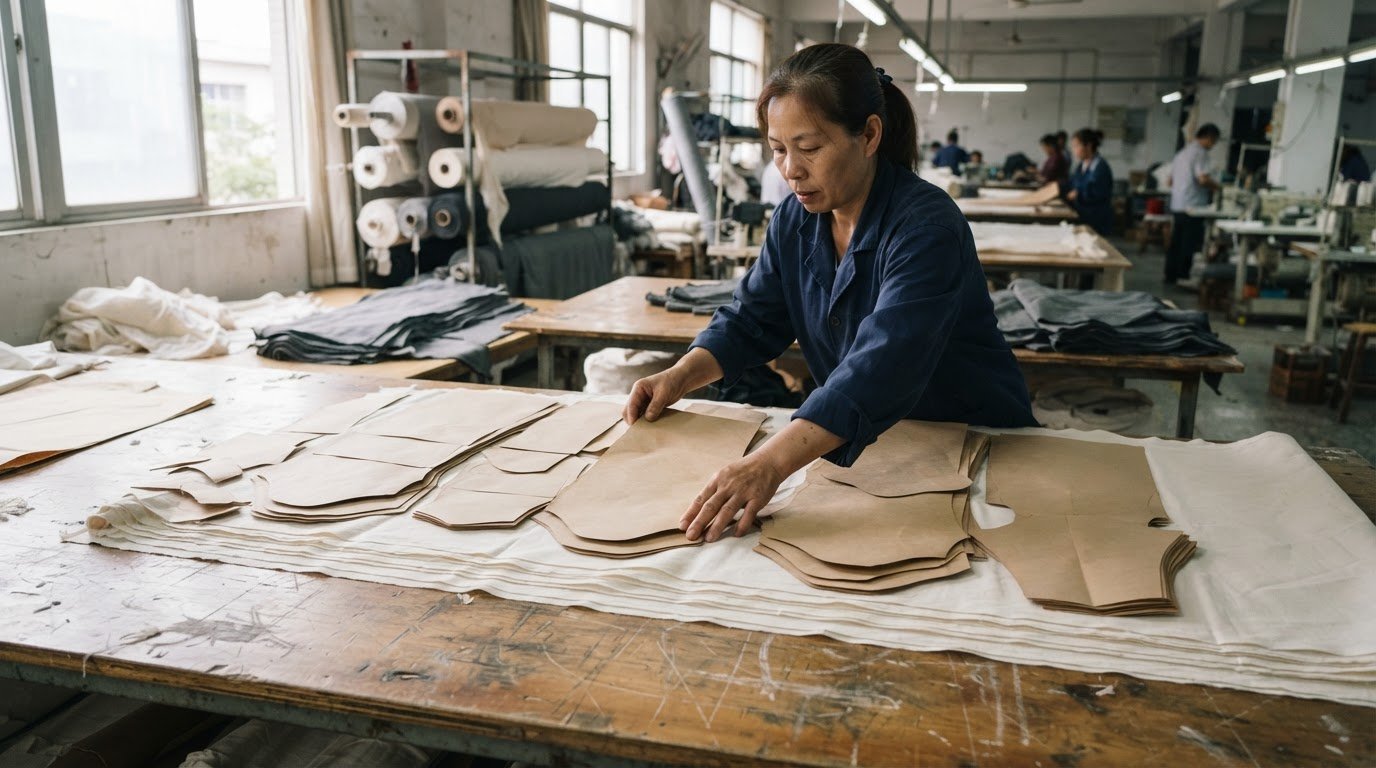
Fashion startups can work with full-package manufacturers, cut-make-trim (CMT) factories, sample rooms, or small-batch producers. Full-package partners coordinate production stages, while CMT factories construct garments from materials and specifications you supply. Match the model to your clothing line: a startup needing pattern making and sourcing support has different requirements from one with production-ready files.
Domestic manufacturing takes place in your own country; overseas manufacturing takes place across a national border. Compare communication, production oversight, shipping arrangements, and access to materials. For example, a founder near a domestic factory may find in-person sample reviews easier, while an overseas partner may better suit a sourcing or production plan.
To find and vet a US manufacturer, search regional garment-production directories, then review each factory’s capabilities and sample process. Share a technical design and ask how the factory translates measurements, seam details, and construction notes into a sample. Check that its past garment examples and quality-control steps suit your product type.
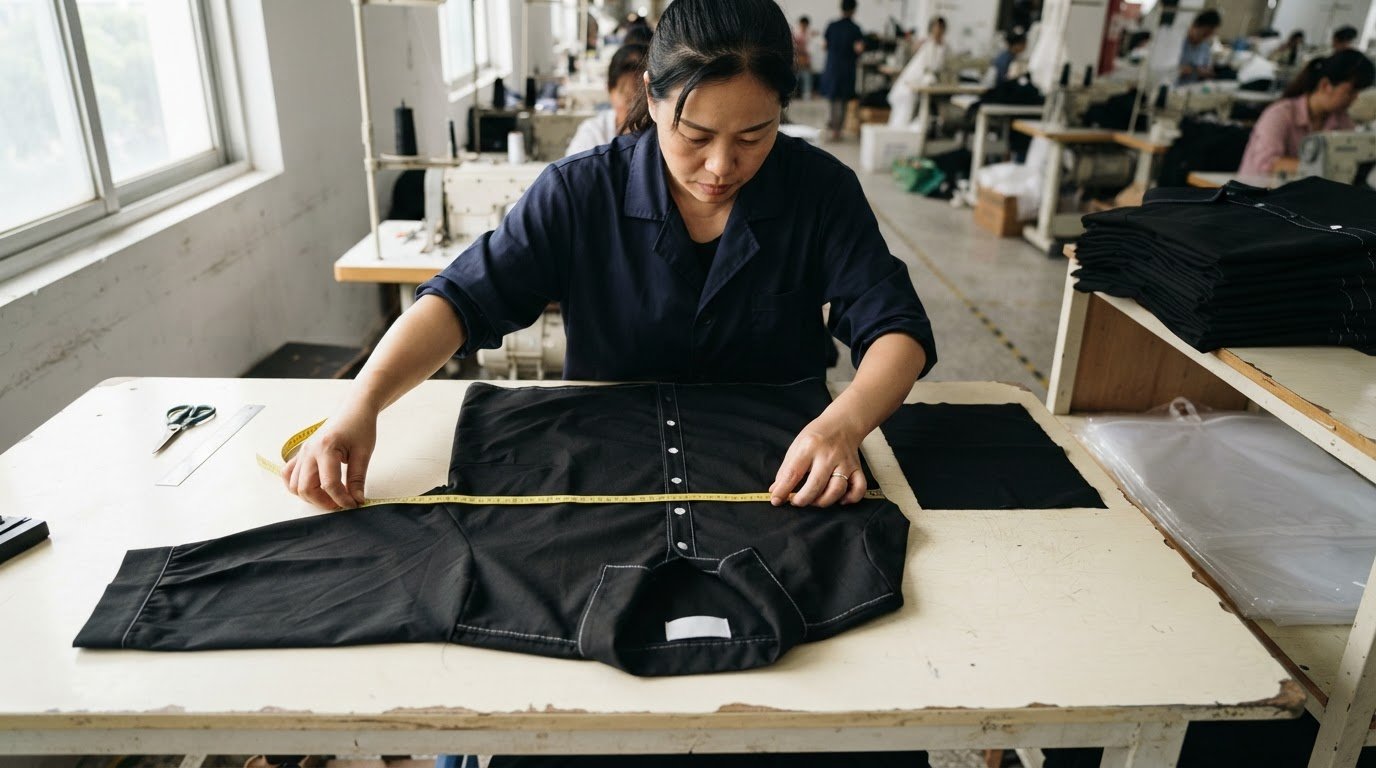
Move from tech pack to finished garments through a defined sequence: review the technical design, create or refine the pattern, develop a sample, approve fit and construction, then begin bulk production. A shirt tech pack, for example, should specify measurements, fabric, closures, and stitch details. Record every approved change so production follows the final specification.
Sampling turns drawings into a garment you can assess for fit, construction, and fabric behavior. Give specific feedback, such as adjusting a sleeve opening or changing a seam finish. Protect design confidentiality by limiting shared files to project participants and putting ownership, permitted use, and confidentiality expectations in writing.
Before signing, clarify who handles pattern changes, sample approvals, quality checks, production timing, and supplied materials. Reduce risks such as fit errors or inconsistent construction by approving a sample, documenting specifications, and agreeing on inspection points. Clear records give everyone a practical reference during production.
Ethical and sustainable manufacturing
Set your apparel standards before comparing factories. Define what ethical production means for your brand, such as safe working conditions, clear hiring practices, and responsible material handling. Turn each priority into a practical request: ask how workplace conditions are monitored, what records can be shared, and how concerns are addressed. Specific questions are easier to assess than broad claims about being “ethical.”
Traceability is a useful starting point. Ask where proposed fabrics and trims come from, what documentation accompanies them, and whether suppliers can be identified. For example, if you’re considering organic cotton, request details about the material’s source and relevant product documentation. A material label alone does not prove the factory’s labor practices or overall environmental performance.
Compare materials against the garment’s intended use and construction. Recycled polyester fabric, for instance, may suit a different design brief than a natural-fiber fabric. Ask how each option affects feel, durability, color, and care instructions. Keep the comparison specific to the style: a lightweight blouse and a structured jacket may need different fabric properties, even within one clothing line.
Discuss production practices in concrete terms. Ask how fabric waste is handled, how cutting layouts are planned, and whether defects are tracked during manufacturing. The answers can help you identify processes to document in your product specifications. For each priority, record the evidence provided, the person responsible, and how it will be reviewed during production. This creates a clear reference for later decisions.
Make quality review part of the plan, not a substitute for ethical standards. A garment inspection can assess workmanship against agreed specifications, while supplier and workplace information addresses different concerns. If you need support with garment checks, quality control services can help assess production quality. Keep material sourcing, workplace practices, and finished-garment checks as distinct review areas.
Fabric and trim sourcing
Choose fabric based on the garment’s intended use, fit, and construction. A flowing blouse may need a softer drape than a structured jacket. Record fiber content, weight, stretch, surface texture, and color in the product specification. These details help you compare supplier options consistently and reduce substitutions that could change the finished garment’s feel.
Request swatches before choosing fabric. Compare them under the lighting where customers will see the apparel, then assess hand feel, opacity, and recovery after stretching. For a fitted skirt, for example, stretch and recovery can affect comfort and shape retention. Approve the selected swatch as the reference for sampling and production.
Fabric cost depends on material, construction, finish, color, and order quantity. A custom finish or specialty weave can make sourcing more complex, while readily available fabric may offer a simpler route. Compare each option’s total impact on the garment, not fabric price alone. Heavier fabric, for example, may affect cutting needs, shipping weight, and the product’s intended retail position.
Specify trims just as carefully. List each button, zipper, thread, label, and elastic by material, color, size, and placement. A contrast zipper on a jacket, for instance, must suit the design and function through repeated use. Check trim samples beside the approved fabric, since colors and finishes can look different when viewed separately.
Use a clear sourcing workflow: define fabric and trim requirements, review available swatches, approve choices, then document the selections for production. If a preferred material is unavailable, compare alternatives against the same specifications before approving a change. This keeps construction decisions tied to the original design. Organized fabric sourcing can help align material choices with garment requirements and production planning.
Low minimum order quantities for startups
Manufacturers offering low minimum order quantities or sample production are better suited to testing a startup collection before scaling. Some support both sample development and smaller bulk runs, while others set higher minimums for each style. Compare the actual production model, not just a headline minimum. One manufacturer may require 500 units per style, which can tie up inventory before a new brand understands demand.
Small-batch production can reduce the risk of surplus inventory and let you test fit, color, and customer response before planning a larger reorder. The trade-off is that smaller runs can affect unit costs and material availability. A style requiring specialty fabric, for example, may face different sourcing constraints from one using readily available material.
Ask how the minimum order quantity is calculated. Does it apply to each style, or can it be divided across sizes and colors? A 300-piece order split across multiple colors may be treated differently from one color run. Clarify whether the minimum covers finished garments, fabric purchases, or both. These details determine how much inventory your launch requires.
Set a launch quantity by mapping expected demand to the size range and colors you plan to offer. Compare that plan with the factory’s minimums and production setup. If the commitment feels too large, simplify the first drop: fewer styles, fewer colorways, or a narrower size assortment can make the order more manageable. Keep future expansion in mind so initial choices don’t lock the line into unsuitable materials.
Separate sample development from bulk production in your planning. Samples can reveal fit or construction issues before those decisions affect a larger run. For example, approve the sample and final specifications before calculating quantities across sizes. Low minimum order options and sample production are available through startup clothing production, with samples ready in 10 days and bulk production in 15–20 days.
PowerSweet Fashion: Custom Women's Clothing Production
PowerSweet Fashion supports fashion startups moving from approved designs to production-ready women’s garments. Turn to the team when your launch needs a coordinated path from sample development through custom clothing production, rather than managing each step separately.
Sample development turns garment specifications into a physical sample for review. Fabric sourcing connects material choices with each design’s needs, while quality control checks finished garments against agreed specifications. Together, these services help founders organize decisions before a production run and keep the process aligned with the approved design.
Bring your technical designs, material preferences, and production goals to establish a clear starting point. To discuss your women’s clothing production needs, contact PowerSweet Fashion.
Move your first collection toward production
Turn your launch priorities into a focused production brief. Identify the styles you plan to develop, the materials that matter most, and the order structure your business can manage. Use those decisions to guide a practical conversation with a clothing manufacturer for fashion startups. A clear brief keeps discussions grounded in the garments you intend to make and the decisions still to be resolved.
PowerSweet Fashion works with fashion brands on custom women’s clothing production, sample development, and fabric sourcing. Share your designs and priorities to start a direct discussion about your collection’s production needs.
Contact PowerSweet Fashion to take the next step and move your ideas toward a production plan. Your first collection can begin with clear decisions and a workable path forward.
Frequently Asked Questions
Are Your Services Scalable Based on My Budget?
Yes. A clothing manufacturer for fashion startups can align production planning with a brand’s budget by narrowing the first run to priority styles, colors, and size options. PowerSweet Fashion produces custom women’s clothing and offers sample development and fabric sourcing to support pre-production decisions. A focused assortment lets you stage a launch instead of spreading available resources across too many designs.
Do You Offer Women’s Apparel Production?
Yes, PowerSweet Fashion produces custom women’s clothing. For a women’s apparel line, define the garment type, construction details, fabric, and intended size range in your tech pack. For example, a dress brief should distinguish lining, closures, and fit details. Clear category and design information helps align pattern development, sampling, and production with the garments you plan to launch.
How Many Different Styles Can I Produce at Once?
The practical number of styles depends on the materials, construction methods, and production resources each design requires. A collection using shared fabric and trims may be simpler to coordinate than one with varied materials or specialized construction. Define each style’s specifications and group compatible designs together. This clarifies how the assortment can be scheduled and where separate production requirements may arise.
What Are the Average Startup Costs for the First Production Run?
There’s no single average that applies across startup brands. PowerSweet Fashion provides a quote after receiving the pattern, tech pack, and fabric. If you don’t have a pattern, PowerSweet can create one before providing a quote for sampling. Construction complexity, material selection, order volume, and design details affect the estimate. Prepare these inputs for a project-specific quote.
What Is Your Minimum Order Quantity (MOQ)?
PowerSweet Fashion’s minimum order quantity is as low as 50 pieces per style and color, with size variations. That structure can help a startup test a specific design without ordering the same quantity in every size. Before planning the range, map the intended size breakdown for each color and style. This makes the order’s composition clearer from the start.
What Are Typical Minimum Order Quantities for Startup Clothing Brands?
There isn’t one standard minimum for every factory or garment. Manufacturers set order thresholds based on production setup, fabric purchasing, construction needs, and how orders are divided across styles and colors. Compare the minimum with your planned assortment and inventory capacity. Ask how the quantity is counted, since a per-style minimum differs from one shared across multiple designs.
Comments