
How to Choose Fabrics for a Collection Based on Garment Behavior

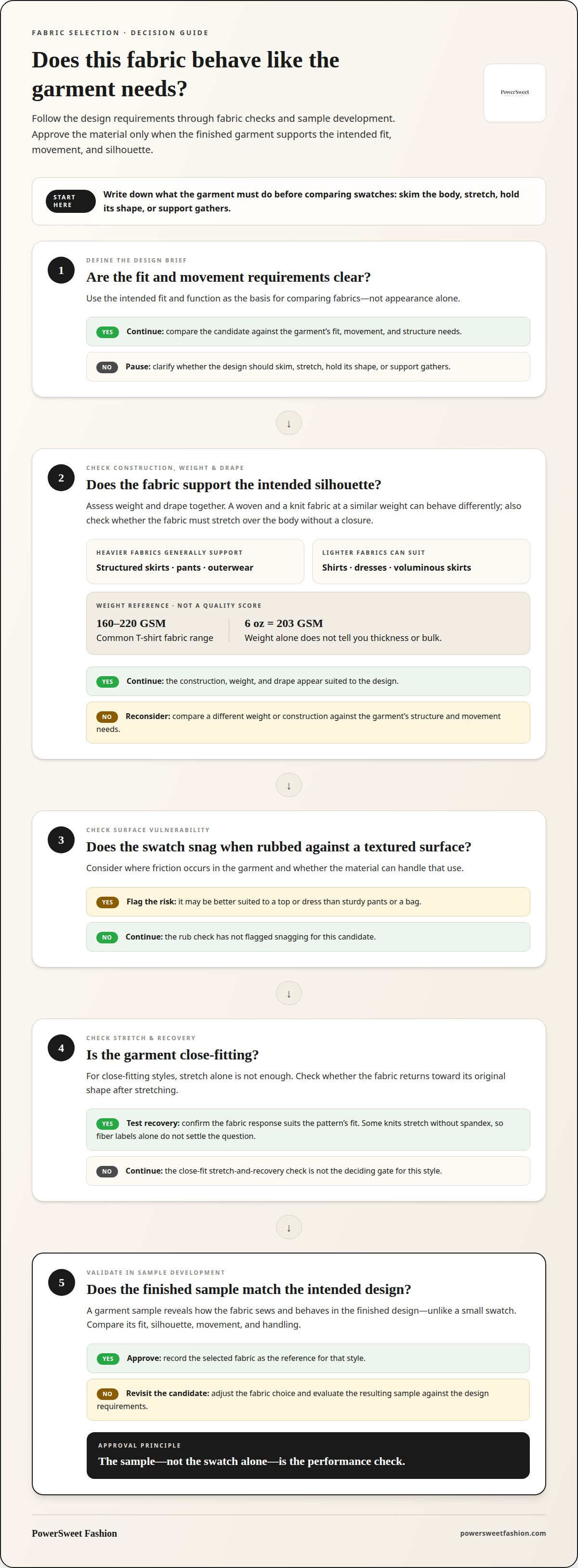
A heavier fabric doesn’t automatically make a better garment. GSM measures fabric weight per square metre: 6 ounces equals 203 GSM, while T-shirt fabrics commonly fall between 160 and 220 GSM. To understand how to choose fabrics for a collection, start with how each garment should feel, drape, and move, then use weight as one part of the decision.
It’s easy to focus on a swatch’s color or texture, but its construction and fiber content can change how the finished garment behaves. This guide explains how to assess those factors and match them to a garment’s purpose. You’ll see how knit and woven structures, weight, drape, and natural, synthetic, or blended fibers shape your choices, so fabric selection supports the collection from the first design decisions.
Table of Contents
How construction, weight, and drape affect garments
Start with the garment’s intended fit and function, then assess construction, weight, and drape together. The same design can look and perform differently in another fabric.
How a fabric sourcing partner assesses fabric weight for garment suitabilityMatch fabric weight to the garment’s structure and movement before approving a candidate. Heavier fabrics generally support structured skirts, pants, and outerwear; lighter options can suit shirts, dresses, and voluminous skirts. For context, T-shirt fabrics commonly weigh 160 to 220 grams per square metre. Construction matters too: a woven fabric and a knit fabric with similar weight can behave differently. Evaluate the intended fit and whether the fabric must stretch over the body without a closure.
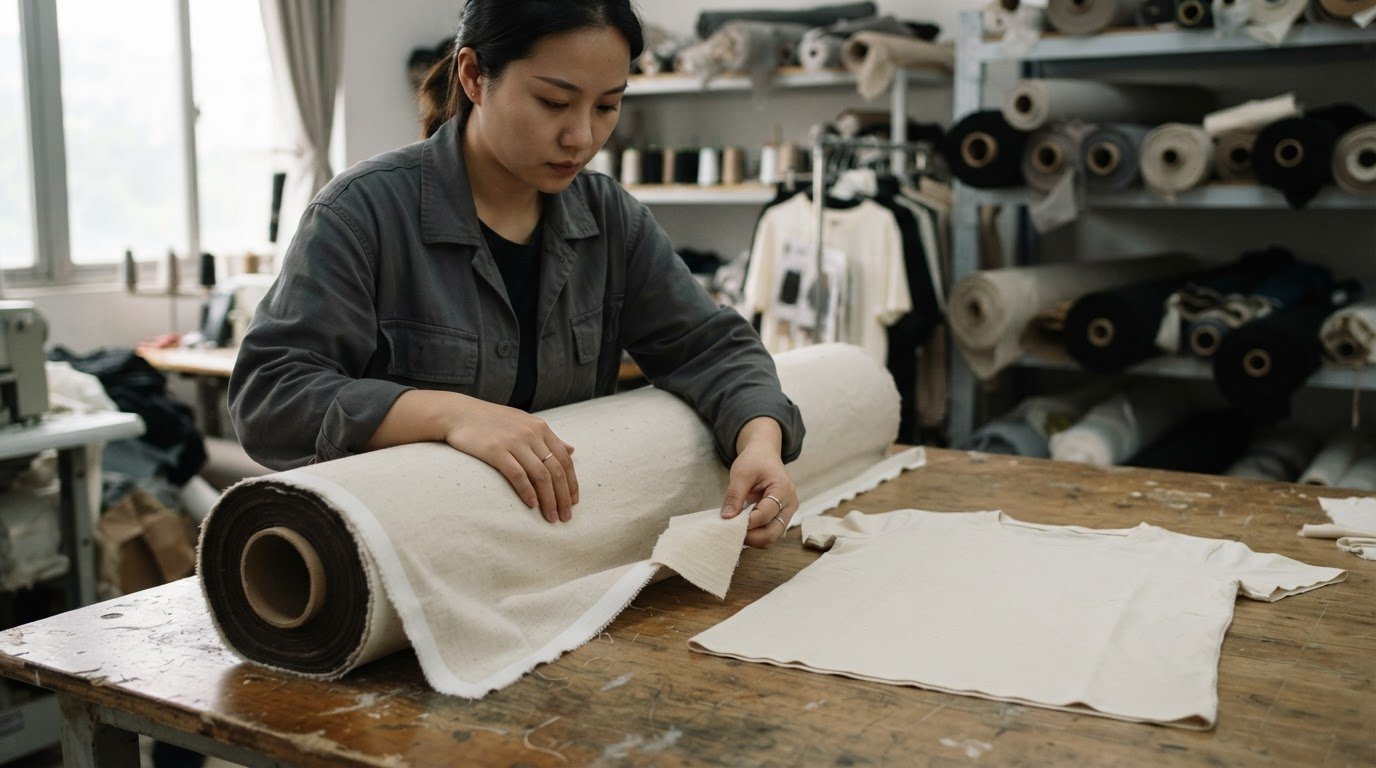
How a fabric sourcing partner compares fabric thickness and costCompare measured weight with actual thickness, rather than treating them as interchangeable. A 6-ounce fabric equals 203 grams per square metre, but weight alone doesn’t tell you how bulky it feels or how it will handle in a garment. Fiber and construction also affect hand and performance. Cost likewise depends on more than weight, including fiber, fabric construction, finishes, and order quantity. A professional estimates collection needs from garment patterns and fabric yield, then accounts for sampling and cutting waste; the required amount varies with those inputs.
How a fabric sourcing partner evaluates drape and feelAssess how the fabric hangs and moves against the intended silhouette. Loosely woven fabrics generally drape more than tightly woven ones; drapier options often suit gathers, while firmer fabrics can support structured pants or jackets. A sourcing partner compares candidates with the design, then arranges samples for garment development and evaluates the resulting fit and feel. For certification requests such as GOTS, OEKO-TEX, or recycled-content standards, the partner aligns the requested criteria with supplier documentation. Lead times, lot consistency, and supplier reliability also shape approval and production planning.
Comparing natural, synthetic, and blended fibers
Compare fiber composition with the collection’s intended use, care expectations, and desired texture. Treat fiber content as one factor in performance, not a stand-alone measure of quality.
How a fabric sourcing partner compares natural and synthetic fibersCompare natural fibers such as cotton, linen, silk, and wool with synthetics such as polyester, nylon, and spandex. Natural fabrics can shrink, wrinkle, and cost more; synthetic fabrics can have lower breathability and may pill. Linen is approximately 30% stronger than cotton, a useful distinction when durability matters. Match these trade-offs to the garment’s use and desired feel, rather than choosing solely by fiber category.
How a fabric sourcing partner identifies synthetic fabricsReview the composition information provided for each fabric, then compare it with the sample’s texture and behavior. Polyester, nylon, and spandex are synthetic fibers, and fabrics may combine them with natural fibers. Don’t infer composition from appearance alone: a soft hand or smooth surface doesn’t tell you whether a fabric is polyester, cotton, or a blend.
Evaluate blends by considering the role of each fiber. A cotton-polyester blend, for example, combines natural and synthetic fibers, but its behavior depends on its actual composition and construction. Match that composition to the garment brief rather than relying on a familiar fiber name. This helps you assess comfort, appearance, and intended use more accurately.
Record the selected composition alongside the approved fabric sample and design details. This gives sampling and production teams a shared reference for the chosen material. For a collection with multiple styles, compare fiber choices across garments to maintain a consistent customer experience. A professional fabric sourcing partner can help align these material decisions with the collection’s requirements.
How a fabric sourcing partner chooses fabric based on garment behavior
A sound sourcing process starts with the garment’s purpose, then checks whether the fabric supports the design in a sample. Knowing how to choose fabrics for a collection means turning each style’s requirements into clear sourcing criteria.
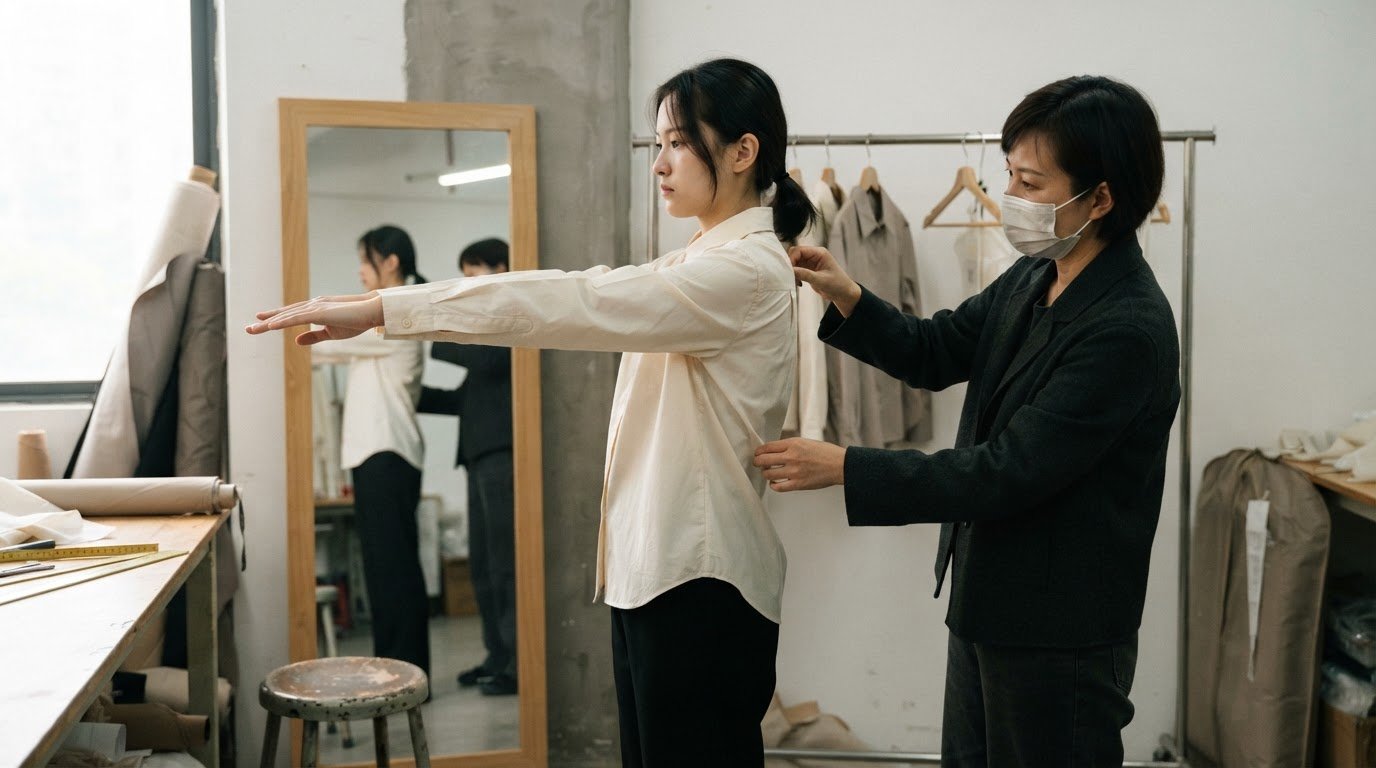
Translate each design into movement and fit requirements. Note whether the garment should skim the body, stretch, hold its shape, or support gathers. A close-fitting top, for example, needs fabric behavior suited to its fit and closure. These details give the sourcing process a practical basis for comparing fabrics instead of choosing by appearance alone.
Assess fabric performance against its intended use. If a swatch snags when rubbed against a textured surface, it may be better suited to a top or dress than sturdy pants or a bag. This check can flag surface vulnerability before a material advances. Consider where friction occurs in the garment and whether the fabric can handle that use.
Test stretch and recovery for close-fitting garments. Stretch alone isn’t enough: a knit intended to fit closely should return toward its original shape after stretching. Some knits stretch without spandex, so fiber labels alone don’t settle the question. When deciding how to choose fabrics for a collection, make sure the fabric’s response suits the pattern’s fit requirements.
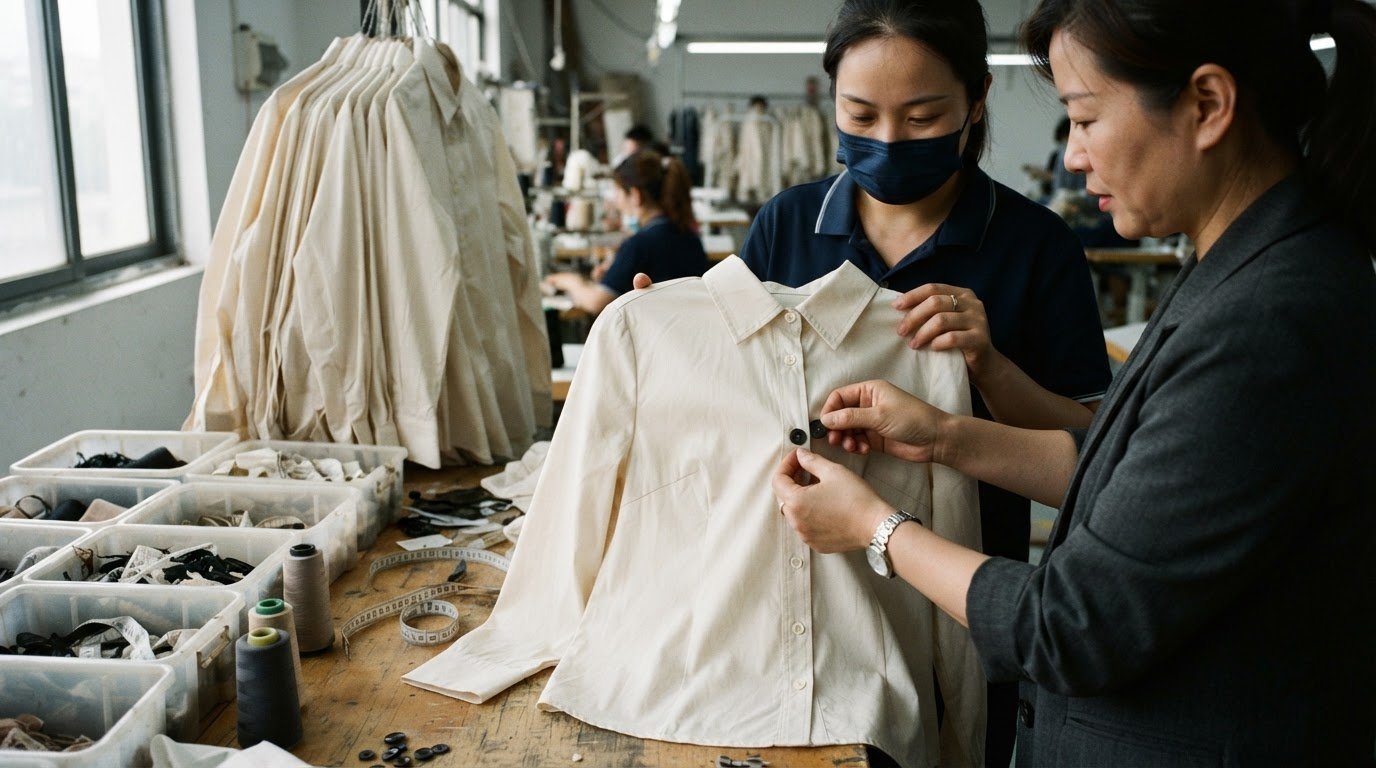
Move promising fabrics into sample development. A garment sample shows how the material sews and behaves in the finished design, unlike a small swatch. Compare the sample with the intended silhouette, movement, and handling. Record the approved fabric as the reference for that style, so later decisions follow the same performance standard.
How can a fabric sourcing partner help choose fabrics that fit a collection’s concept, season, and target customer?
Turn the collection brief into clear fabric criteria, then compare candidates with the concept, intended season, and customer use.
Define the collection’s visual direction with specific references. A main print can guide complementary fabric choices when its colors or motifs repeat elsewhere. For example, a print containing blue and cream can inform the palette for coordinating solids. A sourcing partner also considers how each fabric supports the intended silhouette, so visual consistency doesn’t come at the expense of garment behavior.
Map fabrics to the season and expected wear. Decide whether each style is for warm weather, cooler conditions, or layering, then match the material’s feel and structure to its role. A lightweight summer shirt calls for a different fabric direction than an outer layer designed to go over other garments. The same principles of selecting lightweight, breathable natural materials apply when choosing seasonal home textiles, where resources like King of Cotton explain how fabric weight and weave affect comfort in warmer months. Make these distinctions clear in the collection plan.
Use the target customer and occasion to refine the options. A fabric for everyday separates should support the collection’s intended comfort and care expectations; a statement dress may prioritize movement and visual impact. Polka dots or stripes can add pattern, while related colors help coordinate them. The sourcing partner balances these elements across styles instead of evaluating each swatch in isolation.
Plan fabric placement across the range before final approval. Repeating a color can connect separate garments, while a well-placed accent adds contrast without making every look busy. White, black, and gray can serve as neutrals alongside stronger hues. Review where prints and solids appear: stripe direction and dot placement can change a garment’s overall effect.
Bring your collection concept and garment requirements together through fabric direction for your collection.
PowerSweet Fashion: Fabric Sourcing
PowerSweet Fashion helps brands turn garment requirements into fabric choices through Fabric Sourcing. Use the service to match materials to your designs, intended fit, and production plans. Then move into Sample Development to assess the proposed material as part of a garment, not just as an isolated swatch.
Once the fabric and sample direction are established, Custom Women's Clothing Production carries those material decisions into garment production. Quality Control Services support checks on finished garments against approved specifications. This process connects fabric selection to the physical product and gives the team a clear reference throughout development.
Contact PowerSweet Fashion to discuss fabric sourcing for your collection.
Move Your Fabric Decisions Into Development
A fabric decision is more useful when it has a clear place in the garment brief. As you plan your next collection, define what each style needs to do and which design details must stay consistent. Knowing how to choose fabrics for a collection means connecting material decisions to fit, intended use, and the sample that will guide production.
Bring your priorities to a sourcing discussion: the collection concept, garment designs, target customer, and preferred fabric behavior. PowerSweet Fashion offers Fabric Sourcing, Sample Development, and Custom Women's Clothing Production, linking material selection with the next stages of garment development. This provides a practical starting point for moving from a fabric direction to a sample and production plan.
Share your collection requirements and discuss the next step with Contact PowerSweet Fashion. A well-defined fabric direction can help your team move forward with greater clarity.
Frequently Asked Questions
What Is Fabric GSM?
Fabric GSM means grams per square metre, a measure of fabric weight. It helps compare materials using a consistent unit, but it doesn’t describe thickness, softness, or drape by itself. Two fabrics with the same GSM, for example, may feel different because their fibers and construction differ. Consider weight alongside the garment’s intended fit and function.
What factors should a fabric sourcing partner consider when choosing fabrics for a fashion collection?
A fabric sourcing partner should consider the design, garment use, customer expectations, fabric performance, and production plan. A fitted blouse and a flowing skirt, for example, may need different material behavior even if they share a color palette. Consider whether the selected fabric can be sampled and sourced consistently for the planned styles, keeping design decisions practical through development.
How do fabric properties like weight, drape, stretch, and breathability affect garment design?
These properties shape fit, comfort, movement, and construction choices. Stretch can influence how a fitted garment accommodates movement, while drape affects how fabric falls around the body. Breathability matters for garments worn close to the skin or in warm conditions. A designer and sourcing partner consider these properties together, because changing one material can affect the pattern, lining, and finished silhouette.
How does a fabric sourcing partner compare natural, synthetic, and blended fabrics for a clothing collection?
Compare composition and sample behavior with each garment’s requirements instead of choosing by fiber labels alone. For instance, two cotton-polyester blends may differ in texture or handling because their proportions and construction vary. Weigh appearance, intended wear, care expectations, and production suitability, then record the selected material details to support consistent development across styles.
How can a fabric sourcing partner test fabric quality, durability, shrinkage, and colorfastness before ordering?
Assess a representative sample before approving a larger order. This can include sewing and washing a sample, comparing its dimensions and appearance before and after care, and checking for visible color change or transfer. Inspect and handle the surface to spot issues such as snagging or weak construction. Recording observations against the garment’s requirements helps guide approval and production decisions.
How do you source fabrics with certifications such as GOTS, OEKO-TEX, or recycled-content standards?
State any certification or recycled-content standards you require, then compare those criteria with supplier documentation.
Comments