
How to Find a Reliable Pattern Maker for Your Project

The nearest pattern maker isn’t automatically the best fit. Knowing how to find a reliable pattern maker starts with matching their garment experience and process to your design, then clarifying how the pattern will be sampled, reviewed, and revised. Remote collaboration can work when communication and file sharing are organized, so location alone shouldn’t decide.
Fit and finish matter: a pattern must translate your design into a garment that works in the fabric and size you plan to produce. The right partner makes development clear, from the initial pattern through any necessary corrections.
This guide covers common pattern-making methods, how to assess a pattern maker’s experience and process, and how to compare remote and local options. You’ll also learn which project details to prepare so conversations can move from concept to practical next steps.
Table of Contents
Assessing patternmaker services and specialities
Match the pattern maker’s skills to your garment, materials, and production goals. Assess their work, then define the deliverables before hiring.
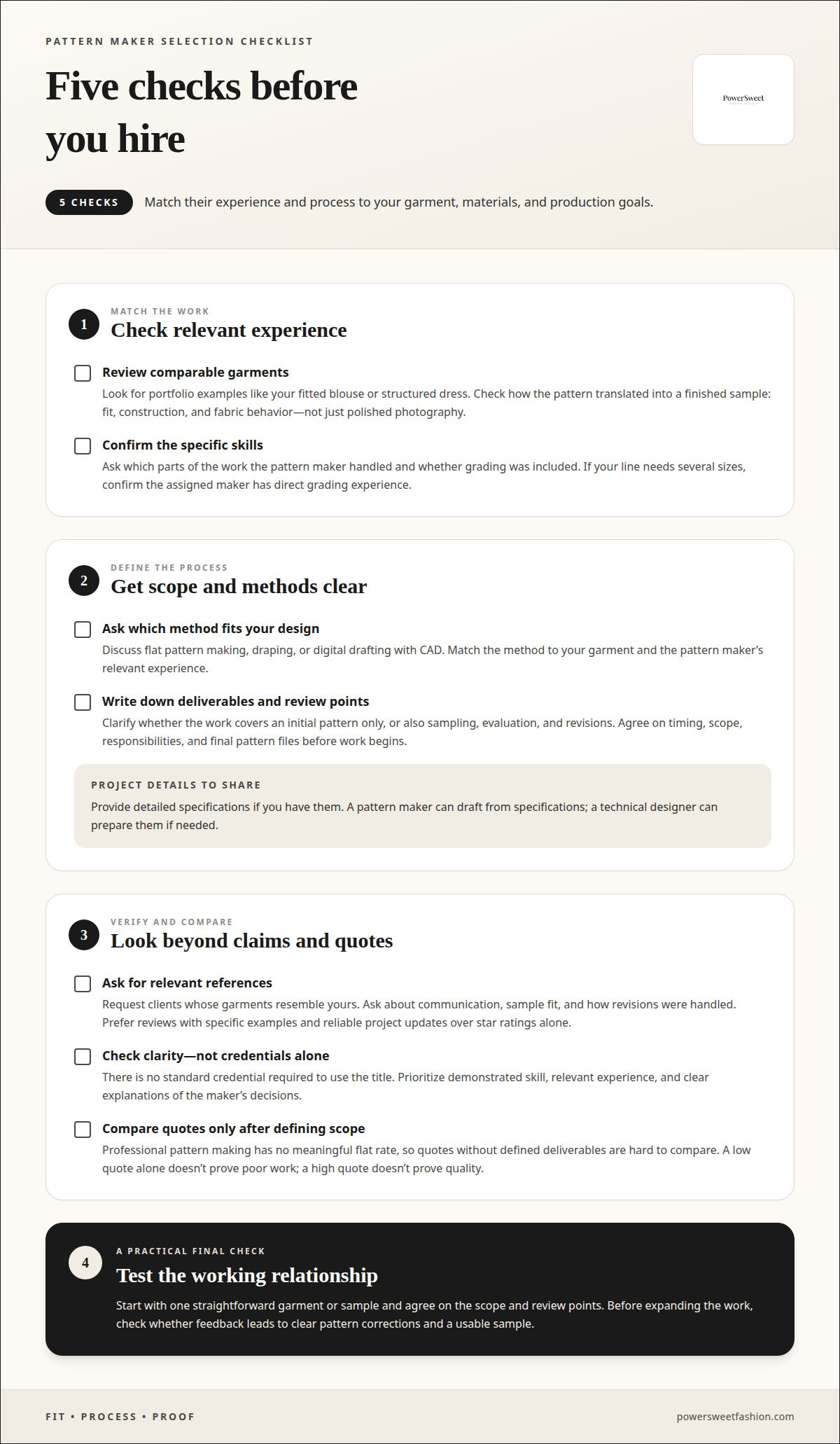
Review Experience and PortfolioReview portfolio examples of garments like yours, such as a fitted blouse or structured dress. Look at how the patterns translate into finished samples, including fit, construction, and fabric behavior. Ask which parts the pattern maker handled and whether grading was included. A polished image alone can’t show how a pattern performs in production.
Prepare Questions Before HiringAsk which method suits your design: flat pattern making, draping, or digital drafting with CAD. Clarify whether the work covers only an initial pattern or also sampling, evaluation, and revisions. Share any detailed specifications; a pattern maker can draft from them, while a technical designer can prepare specifications if needed. Agree on timing, scope, and expectations before work begins.
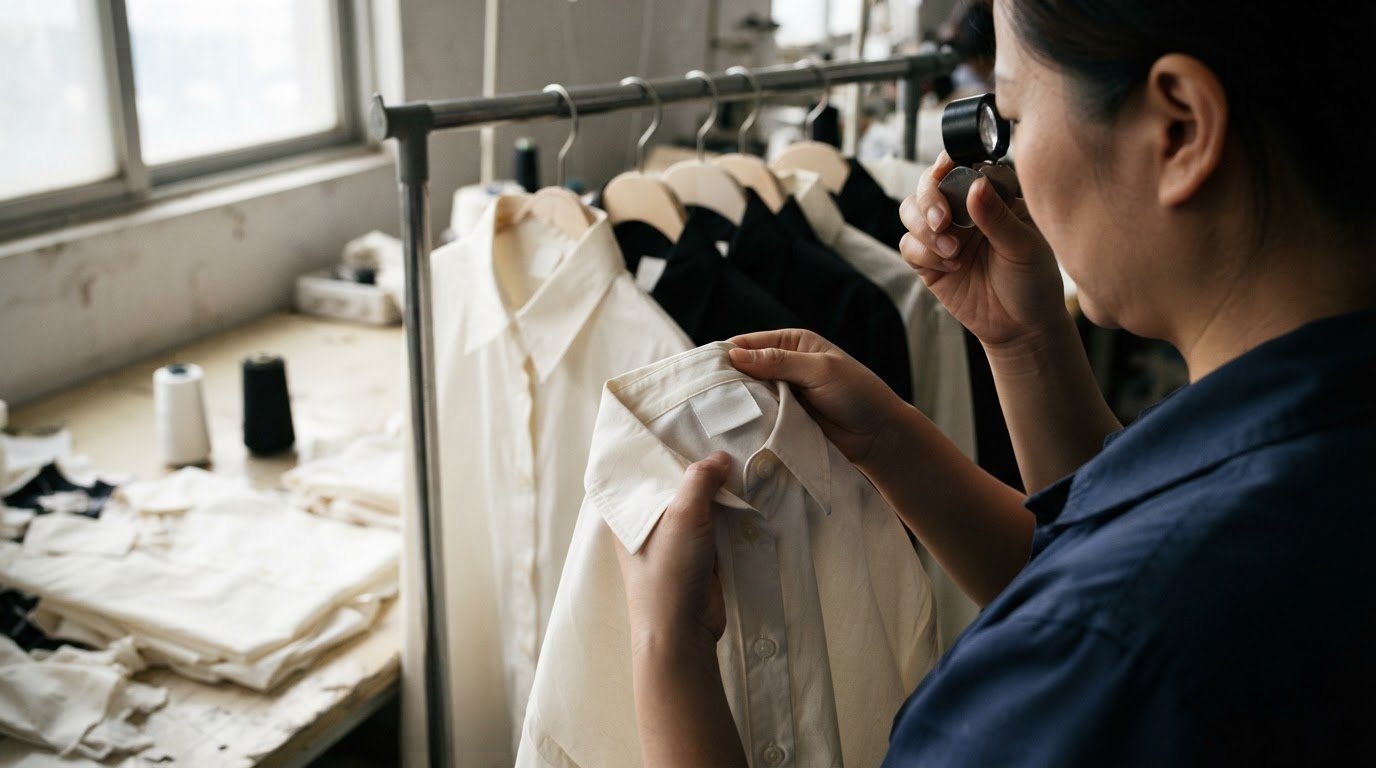
Check References, Reviews, and ReputationRequest references from clients whose garments resemble yours, and ask about communication, sample fit, and revision handling. Look for reviews with specific examples of completed work and reliable project updates, rather than relying on star ratings alone. A pattern maker should be able to explain decisions clearly. Since no standard credential is required to use the title, prioritize demonstrated skill and relevant experience.
Identify Signs of UnreliabilityBe cautious if answers about deliverables, revision responsibilities, or final pattern files are unclear. Quotes without a defined scope are hard to compare because professional pattern making has no meaningful flat rate. A low quote alone doesn’t prove poor work, just as a high quote doesn’t prove quality. Clarify what each service includes before comparing offers.
Test the Working Process with a Small ProjectStart with one straightforward garment or sample, and agree on the scope and review points. Before expanding the work, assess whether feedback leads to clear pattern corrections and a usable sample.
Finding patternmakers online, on social media, at trade shows, and through referrals
Build a focused shortlist through apparel-industry channels, then compare each candidate’s work with your garment and development needs. To learn how to find a reliable pattern maker, use several sources rather than relying on one platform.
Search online for pattern makers whose portfolios feature garments like yours. Look for specific examples of pattern development and related services, rather than broad claims of expertise. Note whether the work suits your product type and production plans. Search results can identify candidates, but portfolio details show whether their experience matches your project. Save relevant examples and note what stands out.
Use social media to find leads, not to settle project details. LinkedIn and fashion apparel groups on Facebook can surface professionals and referrals. Look for posts showing garment development, then move promising conversations to a direct channel where you can share sketches, fabric plans, and project scope. A visible profile is a lead, not proof of fit, so assess the work before proceeding.
Ask designers and apparel-industry contacts for referrals. Useful recommendations include context: the garment involved, the pattern maker’s role, and how communication went. Trade shows are another way to meet pattern makers and get introductions from industry professionals. Record where each lead came from and what kind of work the referral concerns. This makes your shortlist easier to assess.
Expand your search to design schools, small in-house production houses, sewn-product development companies, and manufacturers offering development services. Recent fashion graduates may also provide pattern-making help. Keep your project brief consistent across conversations so you can compare relevant experience and services. If you’re deciding how to find a reliable pattern maker while preparing for production, explore pattern development support as part of your process.
Freelancers versus established businesses
Match the provider’s structure to the work. A freelance pattern maker may suit a defined task, such as drafting one skirt pattern. A business may fit a project that connects pattern development with sampling or production. These are starting points, not guarantees of capacity. Compare the actual deliverables and communication process instead of assuming a provider’s size determines quality.
Map the workload before hiring. List each garment style, sample, fitting review, and revision your development plan requires. Identify who will handle each stage and share updates. For a single-piece project, one specialist may offer a straightforward working relationship. For several styles, clarify how tasks will be coordinated and decisions kept consistent across the range.
Check the skills behind the name. Ask who will draft the pattern and respond to fit feedback. If your line needs several sizes, confirm that the assigned pattern maker has direct grading experience. For example, a freelancer with relevant grading experience may suit your project better than a larger business whose proposed team lacks that specific background.
Compare the working relationship, not just the business format. Consider how each candidate records decisions, answers questions, and communicates changes during development. A freelancer’s direct involvement may suit a founder who wants one consistent point of contact. An established business may fit a project with separate development stages, provided responsibilities are clear. Choose the arrangement that suits your styles, workflow, and desired level of involvement.
Remote versus local pattern-making services
Distance matters less when communication, sample handling, and file sharing are planned clearly. Choose the setup that supports timely decisions about your garment.
Consider whether your project needs in-person work. Local meetings can help when you want to assess fabric drape or discuss a sketch alongside a physical sample. Remote collaboration can suit projects with clear specifications, digital files, and an organized feedback process. What matters is how effectively the professionals can review the garment and resolve fit questions.
Set up remote communication before pattern work begins. Agree on how to share sketches, measurements, fabric details, sample photos, and revision notes. Keep comments specific: identify the garment area, describe the issue, and state the desired result. One organized feedback document helps the pattern maker apply changes without interpreting conflicting messages.
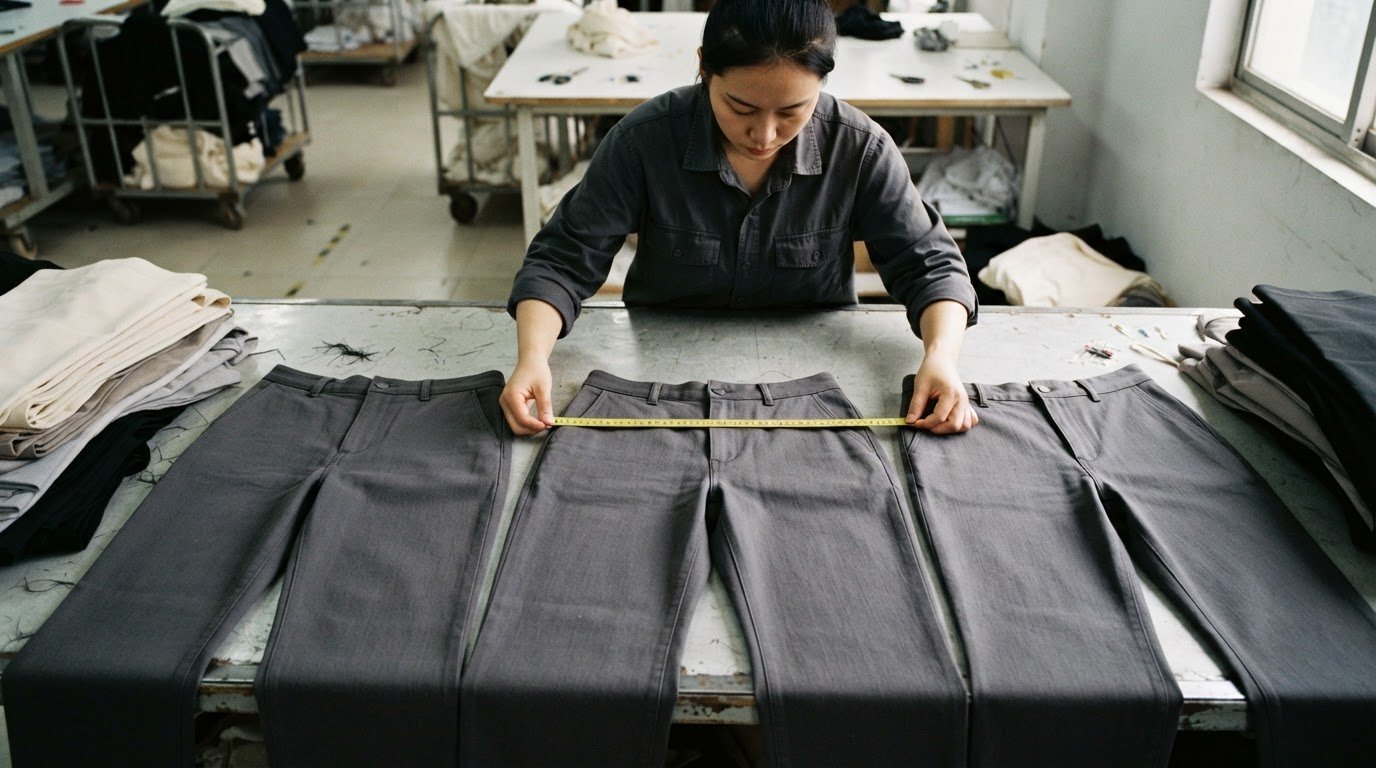
Plan sample reviews around the actual garment. Photos can show visible construction details, but a physical sample helps assess fit and fabric behavior directly. Decide how samples will reach reviewers and how their observations will get back to the pattern maker. Clear responsibility for incorporating evaluation notes keeps revisions connected to the pattern, whether the team works nearby or remotely.
Agree on project scope, timing, and cost in writing. Pricing varies by project; garment complexity, sampling, grading, and revision scope all affect the work. Turnaround also depends on the development stages, how promptly feedback is shared, and whether the sample needs further evaluation or correction.
Record ownership and delivery terms in the project agreement. Include confidentiality, payment terms, services, and ownership of the pattern. Specify which files will be delivered and whether delivery includes final revised files. Review and sign the agreement after scope, cost, and timing are agreed, before the official hire. For coordinated pattern-making support, share your design and development requirements.
PowerSweet Fashion: Pattern Making
PowerSweet Fashion helps fashion brands move from a garment concept toward a production-ready sample through pattern making and sample development. Turn to the team when you need support connecting pattern work with fabric sourcing or custom women’s clothing production. This joined-up process can help keep development decisions aligned as a design progresses from specifications to a physical sample.
PowerSweet Fashion prepares samples in 10 days, with bulk production taking 15-20 days. Share your sketches, garment details, intended fabric, and development goals to give the team a clear starting point. The right pattern-making partner should make the work and handoffs understandable, so you can assess each stage before moving forward.
Contact PowerSweet Fashion to discuss your pattern-making project.
Move Your Design Toward Its Next Stage
Turn a promising concept into a clear development brief. Bring together the sketch, intended fabric, fit priorities, and production goals. These details help focus the conversation on what the pattern must achieve and how you want to review the sample.
PowerSweet Fashion supports this process with pattern making, sample development, and fabric sourcing, alongside custom women’s clothing production. This can suit projects where development decisions and production planning need to work together. A clear brief gives the team a practical starting point and helps you decide what should happen next.
Choosing how to find a reliable pattern maker is ultimately about finding a working process that fits your design and plans. Take the next step at your pace: Contact PowerSweet Fashion to discuss your project. Your concept can move forward with a clear, collaborative plan.
Frequently Asked Questions
What Are Their Methods for Pattern Making?
Common methods include flat pattern drafting, draping, and digital drafting with CAD. Flat drafting develops pieces from measurements; draping shapes fabric on a form before translating it into pattern pieces. Some professionals combine methods, for example draping a complex bodice and refining its pieces digitally. The best method depends on the garment’s structure, the design information available, and the pattern maker’s relevant experience.
What Is a Pattern Maker in Fashion?
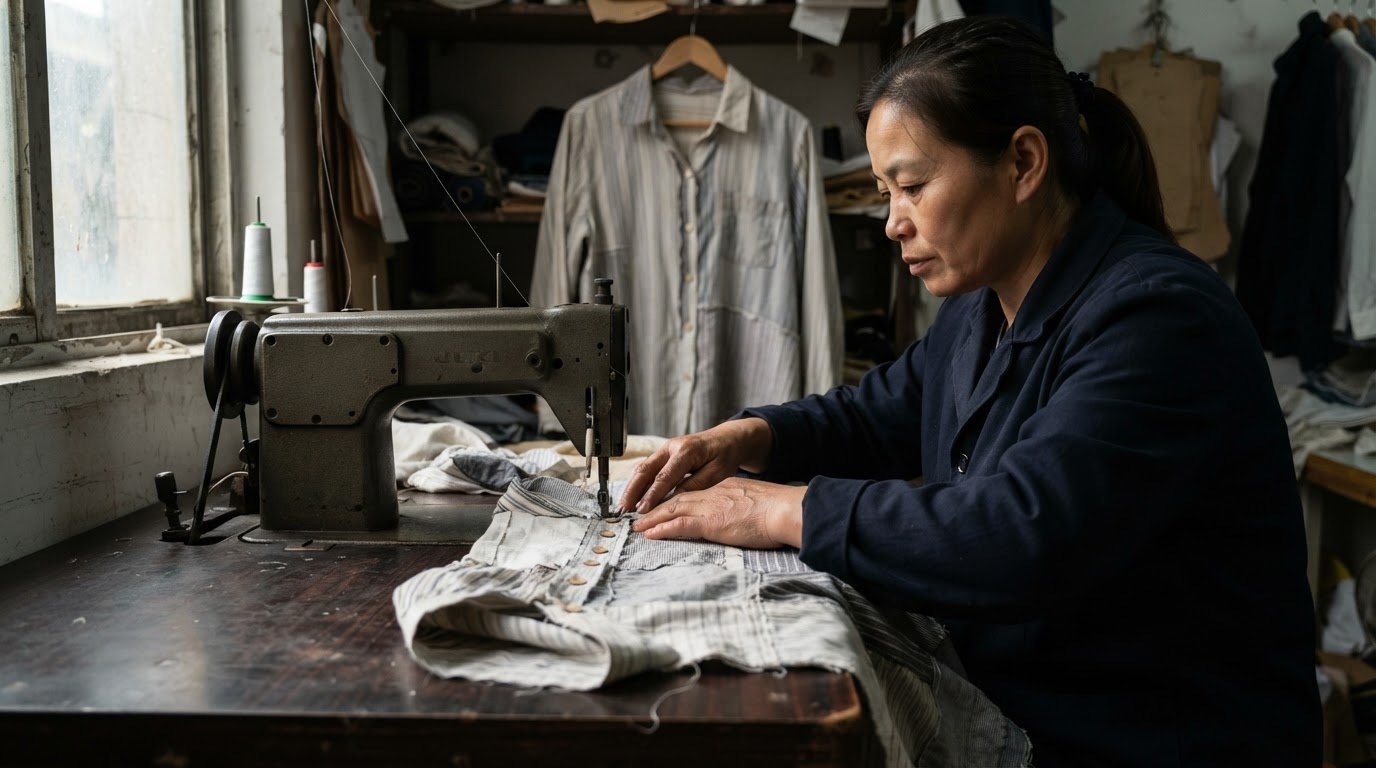
A fashion pattern maker turns garment design requirements into pattern pieces that guide cutting and construction. These pieces define how fabric sections fit together to create the intended shape. For example, a sketch may show a sleeve’s appearance, while the pattern translates its shape and connection to the bodice into workable components. Pattern makers may work from sketches, measurements, sample garments, or technical specifications.
Do They Have Experience With Pattern Grading?
Pattern grading adapts a base pattern into additional sizes while maintaining the garment’s intended proportions and design details. Ask for examples of graded styles similar to yours, such as a fitted top or shaped dress. Discuss which size will serve as the base and how fit feedback will inform the other sizes. This helps distinguish relevant grading experience from general pattern-drafting experience.
How Are Revisions Handled?
Revisions should connect specific sample-review feedback to clear pattern changes. For example, identify a tight armhole, explain when it restricts movement, and note whether the issue appears in the sample or its construction. Agree on who records the correction and updates the pattern file. Keep one current version and a written change log so later reviews use the right reference.
Once You’ve Made the Hire, Where Do You Start?
Start with one organized project brief containing the design sketch, target measurements, intended fabric, sample size, and fit priorities. Include reference images to clarify details the sketch may leave open, such as neckline depth or sleeve shape. Name one decision-maker for feedback and share comments together. This gives the pattern maker a clear development target and reduces conflicting instructions during the first sample review.
What Files Will I Receive, and in What Format?
File delivery depends on the agreed project scope, so list required deliverables before work starts. Specify whether you need a digital pattern, printed pattern pieces, or both, and identify formats your sample maker or production team can use. Ask for the final revised files, with clear file names and size information. Keep the approved version separate from earlier drafts to prevent production confusion.
Comments