
Small Batch Apparel Manufacturing for Startup Brands

Your first apparel run doesn’t need to reach 5,000 units. Small batch clothing manufacturing for startups can begin with orders in the low hundreds, although minimums vary by manufacturer, style and color. The right fit is a production partner whose order sizes suit your launch plan.
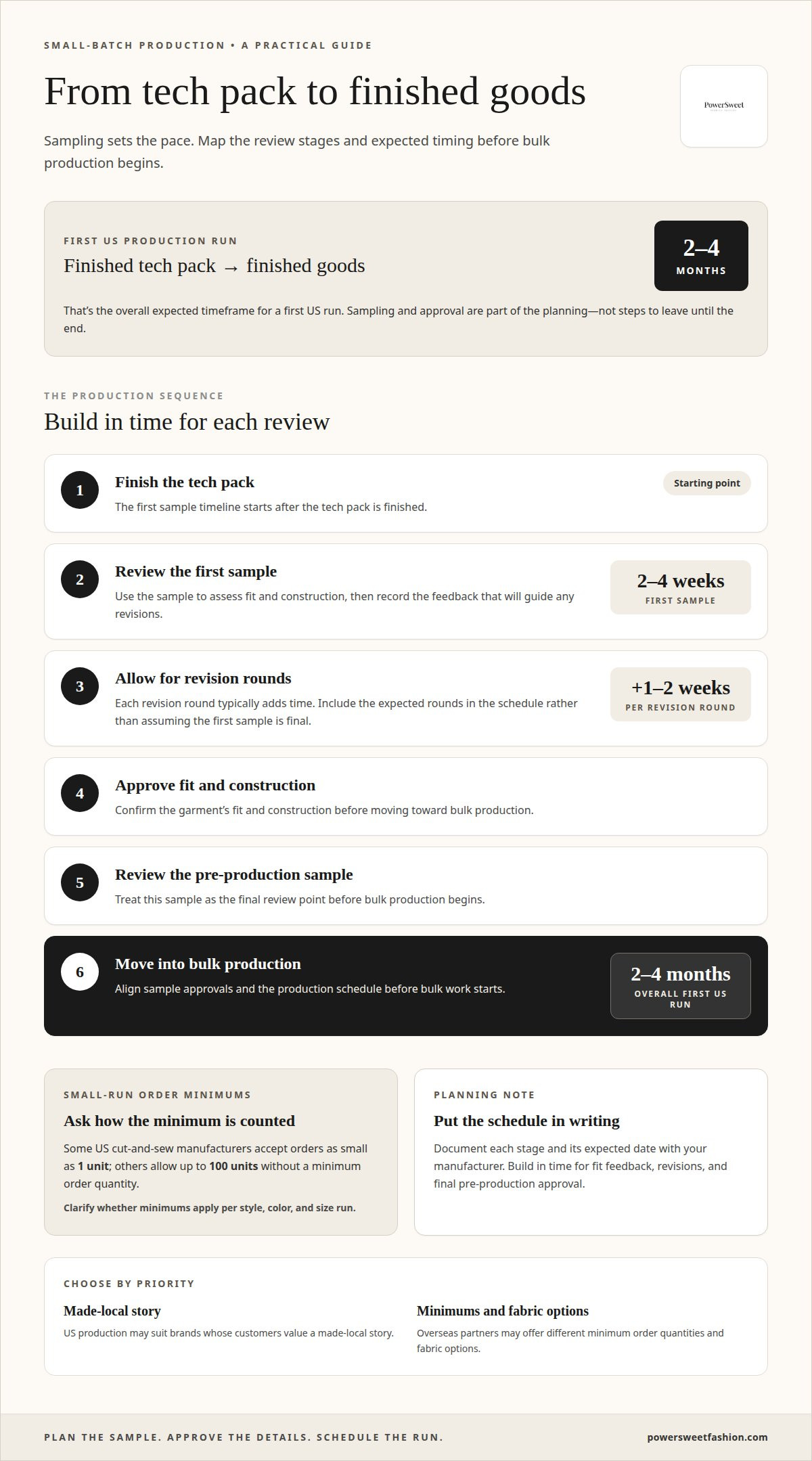
It’s reasonable to be cautious about committing to a large run before you know how customers will respond. Small-batch production can help limit excess inventory, but smaller quantities may come with different production requirements than larger orders. Sampling also takes planning: a first sample typically takes 2 to 4 weeks after the tech pack is finished, and a revision round typically adds 1 to 2 weeks.
Learn how to assess whether small-batch production fits your startup, what custom order sizes involve, and how sampling and production timelines work. We’ll also cover the information a manufacturer needs to scope your order, so you can move from concept to production with clear expectations.
Table of Contents
Sampling and production timelines
Which US clothing manufacturers work with startups and low MOQs? Look for US cut-and-sew manufacturers that accept small runs. Some allow orders as small as 1 unit, while others allow up to 100 units without a minimum order quantity. Ask how minimums apply to each style, color, and size run.
Sampling sets the pace for production. A first sample typically takes 2 to 4 weeks after the tech pack is finished, and each revision round typically adds 1 to 2 weeks. Once fit and construction are approved, a pre-production sample provides a final review point before bulk production. For a first US production run, expect roughly 2 to 4 months from a finished tech pack to finished goods. Put each stage and expected date in writing.
Domestic and international manufacturing can suit different priorities. US production may suit brands whose customers value a made-local story, while overseas partners may offer different minimum order quantities and fabric options. For direct-to-consumer and creator brands, small batch clothing manufacturing for startups can align a run with early demand and help control inventory while testing a new garment.
Small production runs give emerging brands a way to assess fit, fabric, and customer response before increasing quantities. Keeping production below 1,000 units per design can help avoid making more than early demand requires. The trade-off is that smaller runs can make setup work weigh more heavily on each garment. Small batch clothing manufacturing for startups may also limit the available size and color assortment if order quantities are tightly constrained.
Print-on-demand can help test interest, but it may not suit a brand that depends on custom fit, fabric, or construction. For children’s garments sold in the US, product-safety requirements deserve attention; the U.S. Consumer Product Safety Commission provides CPSIA guidance relevant to children’s products. Align the sample approvals and production schedule before bulk work begins.
Look for US cut-and-sew manufacturers that accept small runs. Some accept orders as small as one unit, while others allow up to 100 units without a minimum order quantity; ask how minimums apply to each style, color, and size run.
How do I know if my brand needs a small batch clothing manufacturer?
A startup may benefit from small-batch production when planned inventory is limited or demand is still developing. Assess a manufacturer’s experience with your garment type, construction needs, quality-control process, and how setup work affects the per-piece cost.
To choose a clothing manufacturer, match its production experience to your garment and review its quality-control process. Compare minimum order quantities by style and color, then check how the factory handles size variations and whether its production setup suits your launch volume.
Garment Specialization and Quality Control
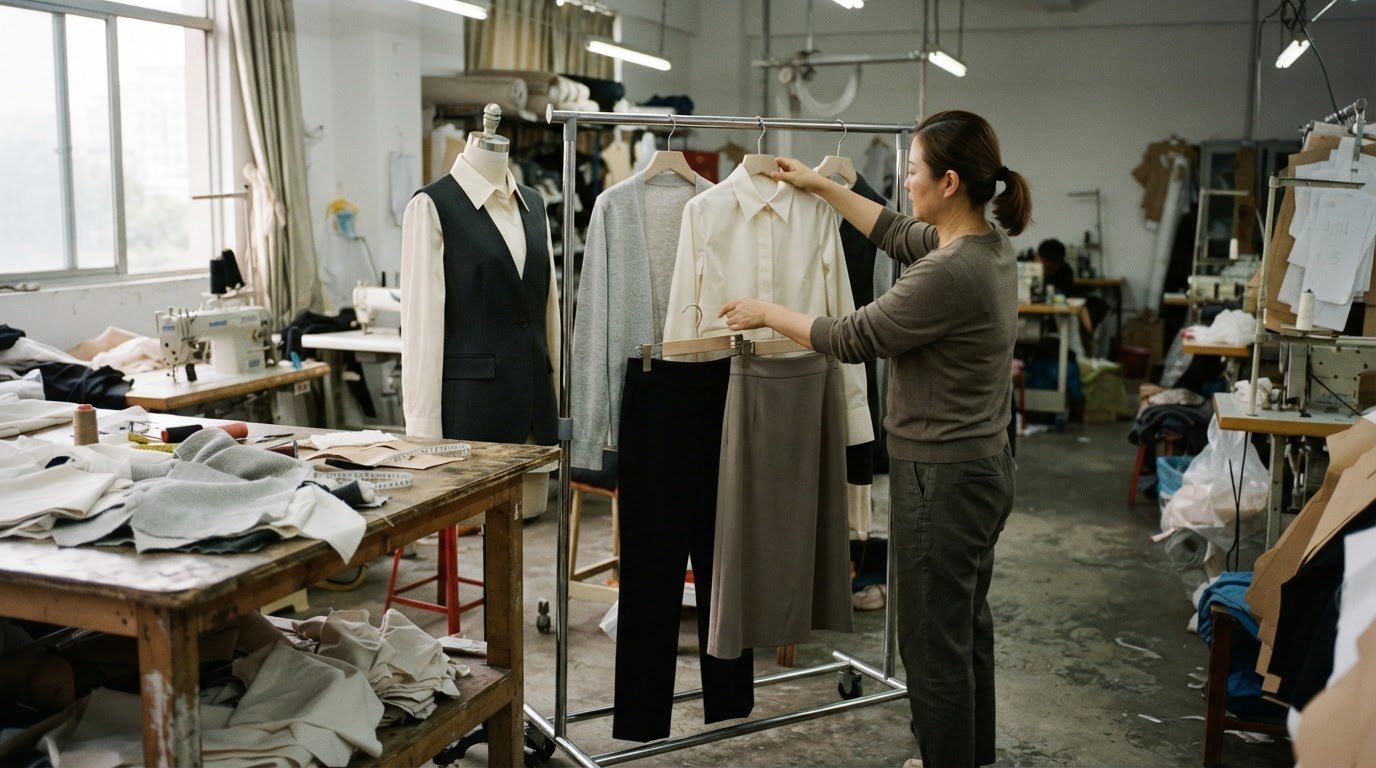
Garment specialization matters because fabric, pattern, and construction requirements vary by style. A manufacturer experienced with knit garments may use different equipment and workflows from one focused on structured or lined pieces. Match the manufacturer’s experience to your design’s construction rather than relying on broad claims about fashion capabilities.
Quality control should cover where inspections happen, what counts as a defect, and how remakes are handled. These details help you understand how a partner will assess the finished garment. For example, a fitted style needs clear measurement and fit checks, while visible seam finishing may matter more for a detail-focused design.
Setup Costs and Per-Garment Prices
Pattern making, marker making, and machine setup can involve costs that don’t shrink in proportion to order size. The same setup costs apply to a run of 36 pieces as to a run of 3,000 pieces. As a result, small runs can carry a higher per-garment cost, even when the design and materials stay unchanged.
At 50 to 150 pieces, small-batch production commonly costs 50 to 100 percent more per unit than production at 300-plus pieces. Consider this alongside the inventory risk of ordering more than your launch can sell. Compare the production plan by style and colorway, and understand which setup tasks apply to each option.
Construction complexity also affects whether a manufacturer suits your design. A simple garment may require fewer construction steps than a structured or lined style, which can involve more pattern and assembly details. Share the garment specifications and fabric information to clarify production requirements. The manufacturer’s ability to handle those details helps determine whether the planned run fits your design.
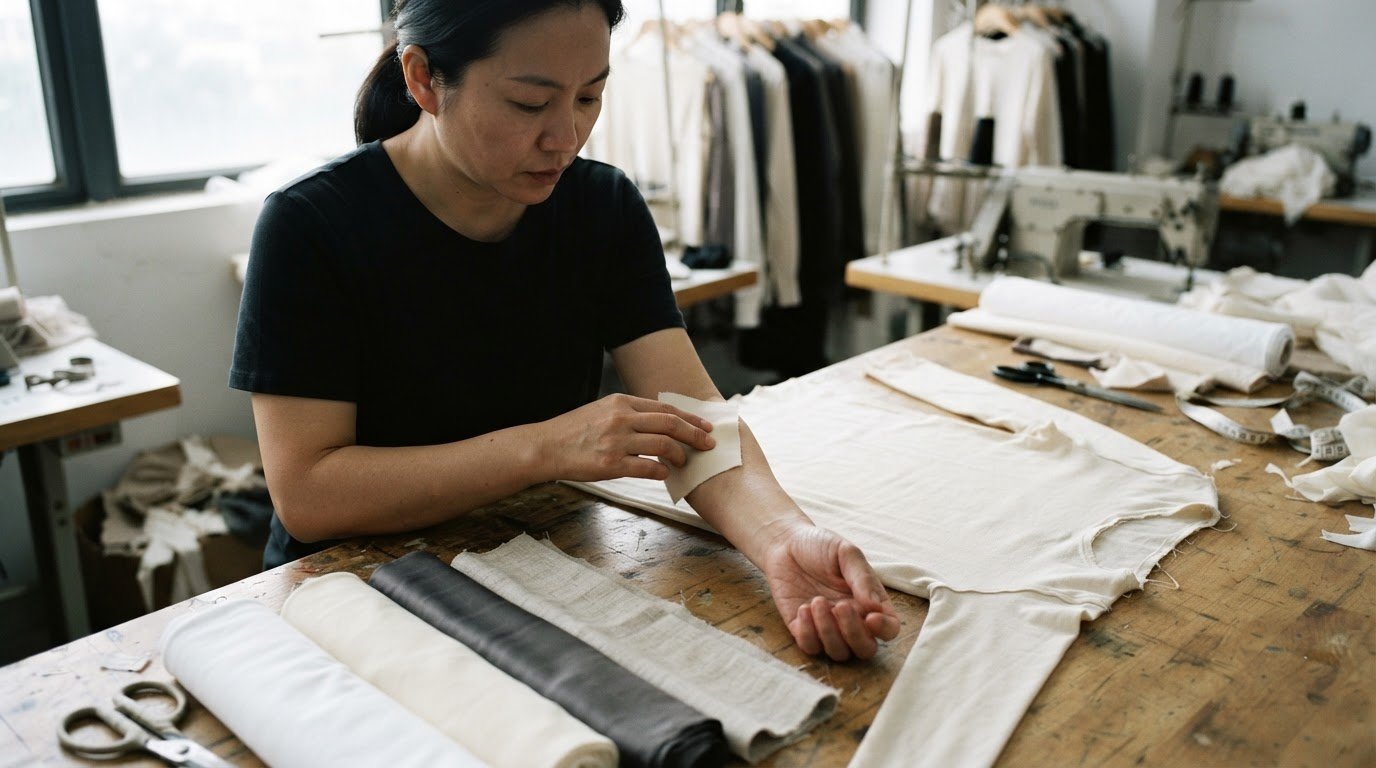
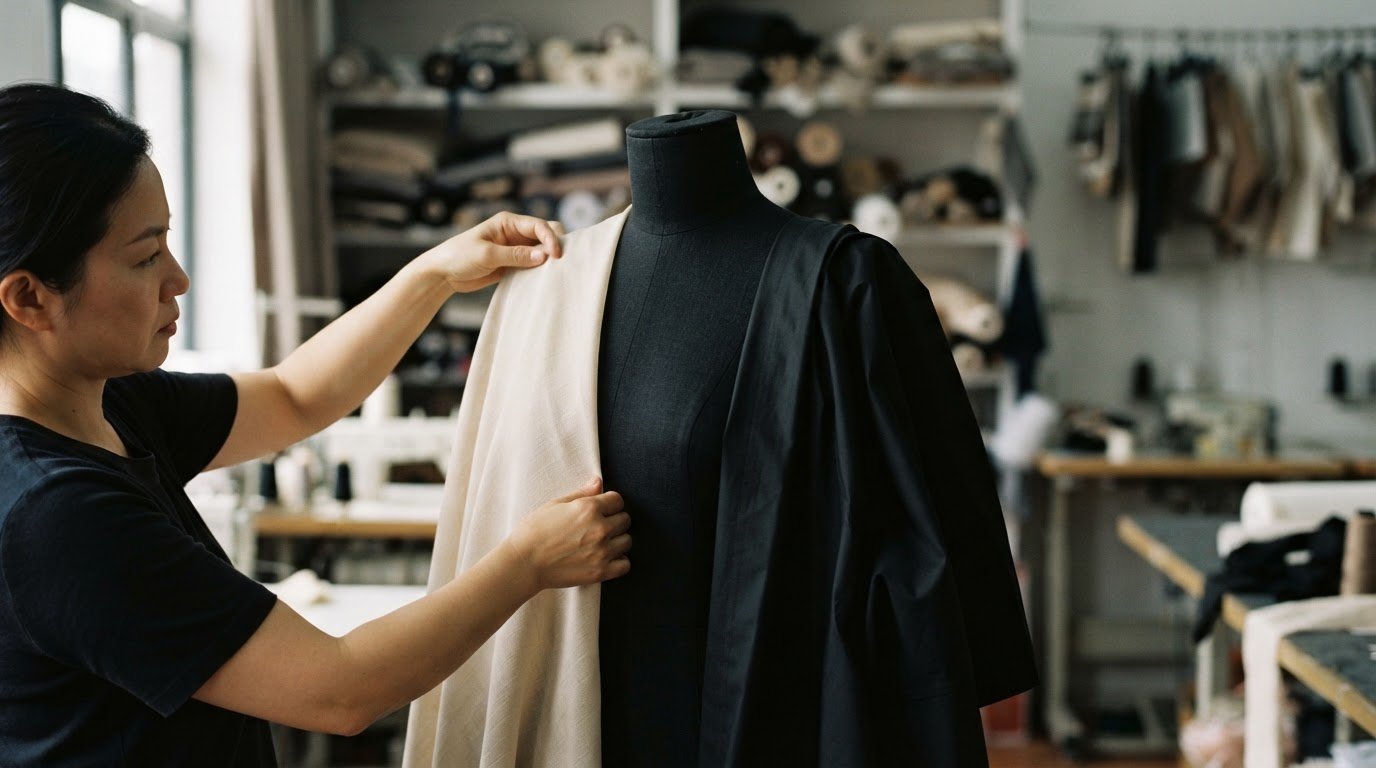
Manufacturing support can include patternmaking and grading, sampling and fitting, fabric and trim sourcing, bulk production and finishing, and labels, tags, and packaging. The right combination depends on what your brand has already prepared. If the pattern is still in development, patternmaking may be needed; if construction is finalized, focus on production specifications and inspection criteria.
Apparel Factory custom apparel and order sizes
A new apparel brand doesn’t need to reach 5,000 units before launching. Small-batch orders are typically in the low hundreds, not thousands, but factories define them differently. One may call 500 units per style a small run; another may accept 50. The useful takeaway is to assess each factory’s minimum by garment style, not by the “small batch” label.
Order thresholds vary across manufacturers. Overseas clothing manufacturers commonly require 100 to 500 units per style, although some export shops accept less. Some apparel factories begin production at around 100 pieces. That range can shape whether a custom collection fits your launch demand, especially when several styles or colorways divide the total order. Clarify how a minimum applies to each style, color, and size run.
Plan quantities at the style level, then map colorways and sizes within each style. For example, a 50-unit requirement per style means a multi-style order can quickly exceed the number of pieces you expected overall. Include estimated quantities for each colorway and a size breakdown in the quote request. A tech pack should describe measurements and construction, while a bill of materials identifies fabric, trims, labels, and packaging.
For direct-to-consumer and creator brands, batch production can connect an initial custom order to observed demand. A limited run gives a brand a defined quantity to sell, while a broader size and color assortment can spread that quantity more thinly. Print-on-demand may help test interest, but custom cut-and-sew suits garments where fit, fabric, or construction defines the product.
Before production, clarify what the quote includes and what might affect the cost. For international orders, provide the shipping destination and preferred Incoterms. A useful production plan aligns quantities by style and color, size allocation, garment specifications, and sample approval before bulk production begins.
What is the minimum order quantity for small-batch clothing manufacturers in the US?
There’s no single minimum order quantity for US small-batch clothing production. Some manufacturers allow orders as small as 1 unit, while others allow up to 100 units without requiring a minimum order quantity. These examples show why “small batch” alone doesn’t tell you how many garments a factory will make.
Minimums may apply by style and color, and size variations may be possible within an order. A manufacturer’s minimum might cover one style in one color, rather than an entire collection. For example, when an order is split across several styles, the quantity for each style matters more than the collection’s combined total. Plan quantities using the same categories the manufacturer uses.
Ask how the manufacturer defines its minimum order quantity and handles colorways and size allocation. Include estimated quantities for each style and color, along with a size breakdown, in your quote request. This helps show whether your planned assortment meets the production threshold or whether a different style mix would better fit the order.
Minimums also reflect production setup. Pattern making, marker making, and machine setup can involve similar fixed work for a run of 36 pieces and one of 3,000 pieces. Smaller orders therefore spread setup effort across fewer garments. The order size that works best balances available inventory, launch demand, and the range of styles your customers expect.
Before committing, align the order quantity with finalized garment specifications and sampling approval. That gives the production plan a defined style, color, size breakdown, and construction target. For emerging brands developing custom women’s apparel, explore low-MOQ custom clothing production as a path from a focused first run toward future orders.
PowerSweet Fashion: Custom Women's Clothing Production
PowerSweet Fashion helps startup brands move from a women’s apparel concept to a production plan. Its custom women’s clothing production is supported by sample development, fabric sourcing, and quality control, bringing key stages of garment development and production together.
For brands planning a focused first run, low minimum order quantities can make custom production more accessible. Samples are ready in 10 days, and bulk production takes 15-20 days. These timelines help you plan sampling and production milestones alongside your launch schedule.
If you’re preparing a women’s apparel collection and want to discuss your production needs, contact PowerSweet Fashion.
Shape your first collection with a clear plan
Your first production decision can shape the collection that follows. Define each garment’s role, the customer it serves, and the details that make the design distinct. Those choices give the manufacturing conversation a practical starting point and help keep the collection focused.
For brands considering small batch clothing manufacturing for startups, the next step is to turn the creative direction into a project brief. Outline the styles you’re developing, the intended assortment, fabric preferences, and decisions that still need development. A clear brief helps align design priorities with the production work ahead.
PowerSweet Fashion supports women’s apparel projects through Custom Women's Clothing Production, Sample Development, and Fabric Sourcing. If you’re ready to discuss your project, contact PowerSweet Fashion about your project. A focused first conversation can help you move forward with clarity and confidence.
Frequently Asked Questions
Are there cut and sew manufacturers with low minimums?
Yes. Some cut-and-sew manufacturers accept low-minimum orders for custom garments, though requirements can depend on the style, fabric, and production setup. A low total order may still need to meet the minimum for each style and color. For example, if a startup is producing two distinct dresses, it should plan the quantity for each style separately.
Does a small run cost more per garment?
Often, yes. Pattern preparation, marker making, and machine setup take work regardless of how many garments follow, so a smaller order spreads those costs across fewer pieces. Fabric choice and construction complexity also affect the quote. Compare what each quote includes, such as sampling or material sourcing, so you assess the same production scope rather than unit figures alone.
What counts as a small batch in clothing production?
There’s no single industry-wide definition of a small batch. The term describes a limited production run, but manufacturers may define it differently based on garment type and workflow. Focus on the quantity assigned to each style, not just the combined collection total. A collection with several designs can have a modest overall order but still require separate production planning for each one.
How much does small-batch clothing manufacturing cost per garment?
There’s no single price per garment for every small production order. The quote depends on order volume, fabric complexity, and garment construction requirements. PowerSweet Fashion provides a quote after receiving the pattern, tech pack, and fabric details. If you don’t have a pattern, its patternmaking service can be part of the process before the quote, giving the production scope a clearer basis.
What are the steps from tech pack and sample to production?
The process moves from garment specifications to sample review, approval, and bulk production. A useful tech pack gives the manufacturer measurements, construction details, stitch types, and tolerances. Pair it with a bill of materials covering fabric, trims, labels, and packaging. Once a sample reflects the intended design, fit, and construction, approval gives the production team a clear reference for making the order.
What lead times should startups expect for small-batch apparel production?
For PowerSweet Fashion, sample development takes 5-7 days, and bulk production takes 15-25 days. Treat these as separate production stages when mapping your launch calendar. Allow room in your plan for reviewing the sample and communicating any changes before bulk work begins. A clear tech pack and prompt approval decisions help keep the stages aligned with your intended schedule.
Comments