
Sourcing organic cotton for a clothing line: Verify supply

An organic claim needs a clear paper trail. When sourcing organic cotton for a clothing line, check that the supplier’s scope certificate covers the relevant activity and that each shipment has a matching transaction certificate. Certification is only one part of the decision: the fabric specification, minimum order quantity, and production timeline also need to suit your range.
It’s important to have confidence in both the cotton and the supply plan before committing to production. This guide explains what to specify when comparing fabrics, how certification and chain-of-custody documents support an organic claim, and what growing methods involve. It also covers how order minimums and lead times can affect your launch plan, helping you assess practical fit alongside material credentials.
Table of Contents
Defining fabric specifications with a professional organic cotton sourcing partner
For sourcing organic cotton for a clothing line, begin with a brief covering fiber content, construction, weight, width, and shrinkage. These details let mills compare the same requirements. Specify whether the garment needs 100% cotton or a blend, plus its intended use. For jersey, define stretch, hand feel, and drape for a fitted top or relaxed T-shirt. A clear brief keeps fabric selection tied to fit and production.
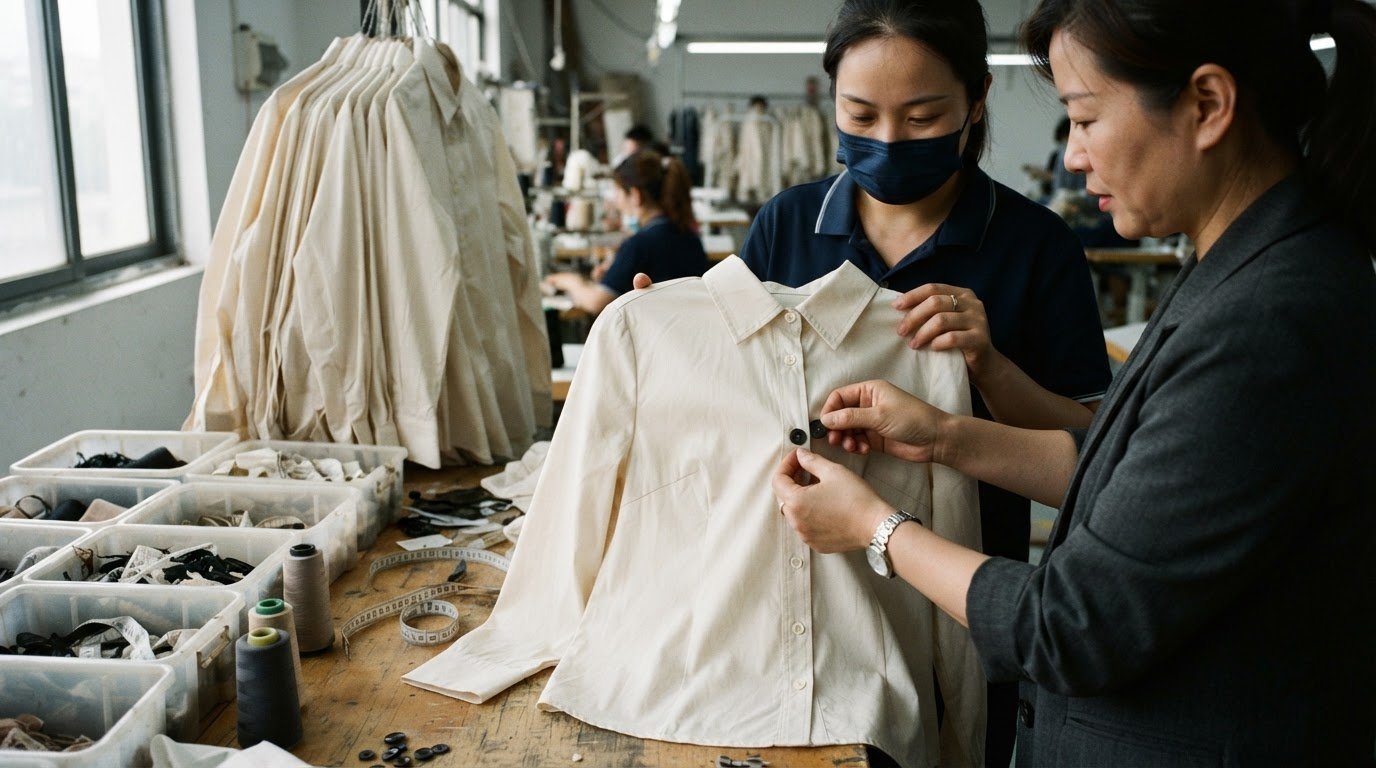
An experienced sourcing partner can assess a reference garment or studio sample by reviewing its fiber statement, color, fabric hand, stretch, and fit. The partner can document which features should carry into the new fabric and coordinate samples with U.S. or overseas mills. A production sample in the actual color helps assess whether the mill can deliver the specified material. Reliable supplier communication keeps requirements and changes visible through sampling and production.
Organic cotton may require a higher initial investment than conventional cotton. There is no fixed price relationship between organic and recycled cotton, as the fiber source and fabric specification affect the comparison. Yard or meter pricing varies by fiber content, construction, width, order volume, and freight. Compare landed-cost quotes rather than fabric-only prices, since transportation affects the full material cost.
When sourcing organic cotton for a clothing line, you can also assess existing household textiles, pre-loved garments, charity-shop fabrics, and offcuts from local dressmakers. Deadstock is excess fabric left over from production runs; end-of-roll material can work when its available length, condition, and color suit the planned styles. Because supply is limited, these options are better suited to designs that don’t need to be repeated exactly.
Per-yard or per-meter cost depends on the fabric specification and order, not a universal rate. Compare fabric quotes with sampling needs and landed cost before finalizing the production choice.
2. How can you check the cotton and its chain of custody?
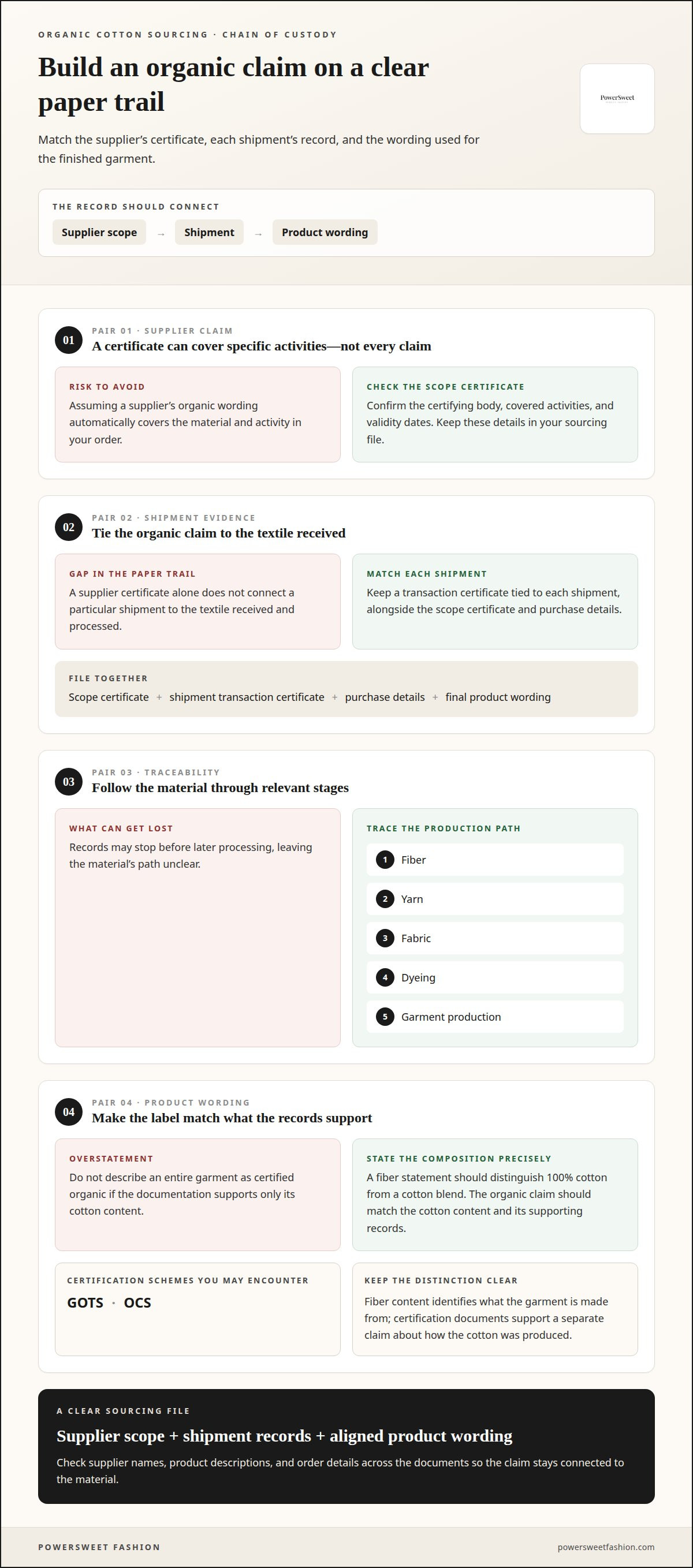
Start with the supplier’s exact organic wording and the documents that support it. A scope certificate identifies the certifying body, covered activities, and validity dates. Keep those details in your sourcing file, along with a transaction certificate tied to each shipment. The shipment record connects the certified organic claim to the textile received and processed for manufacturing.
GOTS and OCS are certification schemes brands may encounter for organic cotton. The applicable certificate and its scope show what the documented claim covers. In the United States, organic wording on clothing labels and in advertising should match the supporting records. Avoid describing an entire garment as certified organic if documentation supports only its cotton content.
Traceability depends on records that follow the material through relevant stages, such as fiber, yarn, fabric, dyeing, and garment production. A sourcing partner can organize certificates and shipment documents together, then check that supplier names, product descriptions, and order details align. If a garment is labeled 100% cotton, the fiber statement should distinguish that from a cotton blend; organic certification documents support a separate claim about how cotton was produced.
Minimum orders can differ between in-stock fabric and custom colors. Existing stock may be available in a set shade and quantity, while custom dyeing or printing involves a specific color or design request. The order threshold depends on the mill’s process and the amount of material needed. A sourcing partner can coordinate these options and keep the selected color or print connected to the relevant production records.
For stronger claim control, keep the scope certificate, shipment transaction certificate, purchase details, and final product wording in one traceable file. Fabric sourcing support can help organize those records alongside material selection and garment production.
3. Organic cotton growing methods and environmental impacts
Organic cotton growing methods can differ from conventional practices, including in how growers manage inputs. Instead, growers may use methods such as crop rotation and composting to maintain soil fertility. These practices shape the inputs used during cultivation, so an organic claim describes a different growing approach, not simply a different fabric finish. This distinction matters when a clothing line makes environmental statements about its materials.
Conventional cotton farming uses substantial amounts of pesticides and water. Organic methods exclude synthetic chemicals from cotton production, but that alone doesn’t establish every environmental outcome. Growing conditions, farming practices, processing, and the finished garment’s composition all matter. Describe the material and its certified status precisely, without implying that one fiber choice resolves every impact across a product’s life.
In the United States, all cotton sold as organic must meet strict federal regulations covering how it is grown. That requirement concerns cultivation; it doesn’t mean every later manufacturing stage uses organic methods. Cotton may be spun, knitted or woven, dyed, printed, and sewn after harvest. Each stage changes the material’s production history, so wording about organic cotton should stay precise.
Blends need particular care. A garment made with organic cotton alongside another fiber should not be described as 100% cotton. Its specification should identify the component fibers clearly, while the organic claim should match the cotton content and supporting records. For example, a cotton-polyester blend differs from a garment made entirely from organic cotton, even if both use some organic fiber.
For a sourcing decision, connect the growing method to the garment brief. If your line prioritizes organic cotton, specify fiber content first, then assess fabric construction, color, and intended use. Growing methods explain how the cotton was cultivated; chain-of-custody records address its movement through supply. Together, they help you describe material choices accurately and avoid broad environmental claims unsupported by the product’s documented journey.
4. Minimum order quantities and lead times
Minimum order quantities depend on fabric availability, color, and production setup. In-stock organic cotton may suit a smaller first run if its shade and quantity fit the design. Custom colors or printed fabric can require a larger commitment because mills must process fibers and schedule dyeing or printing. Ask for minimums by fabric, color, and garment style, rather than relying on one total for the collection.
Low minimums help brands test a range without committing to excess finished stock, but they don’t remove the need for planning. A small order can still depend on available fabric, compatible trims, and the factory’s production schedule. Confirm how the order quantity applies across sizes and colors, then align it with your assortment and expected demand.
Lead time covers more than sewing. Fiber and fabric availability, dyeing, printing, sample approval, production capacity, and shipping all affect the schedule. A change to the color or fabric after approval can add steps. Build the calendar backward from your launch date, allowing time for samples, revisions, bulk production, and delivery.
For this production partner, samples are ready in 10 days and bulk production takes 15-20 days. These durations help anchor planning, while fabric readiness and approvals still shape the full schedule. Keeping the approved sample, color choice, and production details aligned can reduce avoidable delays between development and finished garments.
Supply shortages can push orders back or limit the quantity available in one fabric lot. Quality variation between lots may affect color, feel, or performance, while long lead times can compress the window for selling and replenishing. A sourcing partner can plan around those risks by coordinating material selection, approvals, and quality control before bulk production begins.
Set the order quantity and target delivery date together, then identify decisions that could affect either. Plan your organic cotton production with the material, sample, and bulk schedule connected from the start.
PowerSweet Fashion: Custom Women's Clothing Production
PowerSweet Fashion supports clothing brands with organic cotton fabric sourcing connected to garment development and production. Its Fabric Sourcing and Sample Development services help align selected materials with a design before bulk manufacturing begins. Custom Women's Clothing Production and Quality Control Services support the next stages, from approved sample to finished garments.
This is a practical next step when your fabric requirements, certification documents, and production plan need to work together. Share your designs, preferred cotton specifications, and target order details so the development process can reflect your line’s needs.
Contact PowerSweet Fashion to discuss your organic cotton clothing project.
Turn your material plan into the next development step
Make sourcing part of your product development plan, not a separate material choice. For a first style, identify the design priorities that matter most, such as hand feel, color consistency, and how the garment should perform when worn. Use those priorities to guide sample review and decide what must be resolved before production moves forward.
A clear brief also gives your team a shared reference point. Design, sourcing, and production can work from the same requirements, reducing the risk that a late material change disrupts the intended garment. A thoughtful approach to sourcing organic cotton for a clothing line connects the fabric decision to the product you want to deliver.
When you’re ready to discuss the next step, contact PowerSweet Fashion about your sourcing needs. A well-defined starting point can help turn your material direction into a clothing line with purpose.
Frequently Asked Questions
Can you provide organic certification?
PowerSweet Fashion sources fabric, while organic certificates are issued by the relevant certifying body. Certification applies within its stated scope. For a clothing order, the material records should support the claim used for that fabric or garment. Keep supplier certification distinct from the manufacturer’s production role so your marketing language accurately reflects the evidence.
How can a sourcing partner check whether a GOTS claim is genuine?
Check whether the supplier’s scope certificate covers the relevant material and activity, then match shipment documentation to the order. For example, a certificate naming a different supplier or product may not support the specific fabric claim. The product description, supplier details, and shipment record should form a consistent trail before GOTS wording appears in product copy.
How does a professional supplier check the cotton and its chain of custody?
A professional supplier organizes the records linking the cotton material to the purchase and shipment, then checks that the documents describe the same product. If fabric is dyed or printed before garment production, those processing stages should fit the documented claim. This record review helps distinguish a traceable organic-cotton input from a broad claim unsupported by the order documents.
Is the fabric GOTS certified?
The answer depends on the fabric’s applicable certification documents and their scope. A garment maker’s certification status alone doesn’t establish that a specific fabric is GOTS certified. For example, distinguish a documented GOTS fabric claim from a product that simply contains cotton described as organic. Use wording that accurately matches the records associated with the fabric and finished item.
What is the minimum order quantity for organic cotton fabric and apparel manufacturing?
Apparel production at PowerSweet Fashion starts as low as 50 pieces per style and color, with size variations. That figure describes garment production, not a universal fabric minimum. Fabric quantities depend on whether the selected material is in stock or requires custom dyeing or printing. Align the garment order with the material quantity and color plan before production starts.
What questions should brands ask a potential organic cotton sourcing partner?
Clarify how fabric documents are matched to the order, how sample approval is handled, and how material selection is coordinated with garment production. Ask how color, print, and fabric availability affect the proposed order plan, and how changes are recorded after approval. These points show whether sourcing decisions connect clearly to the finished product rather than being handled separately from manufacturing.
Comments