
Sustainable Garment Processing: Materials, Energy and Labor

A garment’s footprint is shaped long before it reaches a wardrobe. Sustainable garment processing considers the materials selected, energy and emissions from textile treatment, fabric-cutting waste, quality checks, and conditions for the people making it. The textile and garment industries contribute 4-10% of global carbon emissions, making production decisions an important part of clothing sustainability.
It’s understandable to focus on a fabric label, but fibre alone doesn’t tell the whole story. Processing methods, fabric-cutting efficiency, garment durability, and worker treatment all matter.
Assess these factors together: material choices, processing emissions, energy use, waste reduction, quality checks, and labor practices. Understanding how they interact can help you make more responsible production decisions without compromising performance or durability.
Table of Contents
Organic cotton, bamboo, hemp, recycled polyester, lyocell and Piñatex
Fiber choice shapes a garment’s environmental impact, but no material is automatically best. A cotton T-shirt requires 2,700 litres of water when made with conventional cotton, compared with 243 litres for organic cotton. These figures illustrate why material sourcing matters, but brands should also weigh intended use, durability, and processing. The Global Organic Textile Standard (GOTS) is one sustainability standard. Keep supplier and chain-of-custody documents for materials described as organic, recycled, or certified.
Compare each fiber against the garment’s performance needs. Recycled polyester uses recovered material, while its synthetic composition can complicate end-of-life recycling. Bamboo-based fabric depends on how the fiber is processed, so composition and production details matter. Hemp offers another plant-fiber option; assess its fabric specifications alongside cotton, including weight, stretch, shrinkage, pilling resistance, and care requirements. Lyocell production uses a closed-loop process that recycles 99% of its non-toxic solvents. Piñatex is another material option, but brands should assess its composition and fit for the product rather than treating a material name as proof of sustainability.
Processing choices matter, too. Dyeing, finishing, and care requirements affect fabric performance and the treatments it needs. Match material specifications to the garment’s purpose, then review colour fastness and durability before approving production. This helps prevent a supposedly responsible fibre from failing in use or needing early replacement. Fabric sourcing records can also link material claims to suppliers and origins.
Waste reduction extends beyond the factory floor. Textile recycling includes mechanical and chemical methods, while automated sorting helps separate used textiles by material. Upcycling can give suitable discarded garments or fabric another use. Yet only 13% of materials used across the garment value chain are recycled. Design for recovery by keeping material composition clear and choosing trims that support sorting. These technologies can support better resource use, but recycling works best when garments are identifiable and collected for appropriate processing.
Textile processing emissions and energy use
Textile processing includes fabric preparation, dyeing, finishing, and garment assembly. Each stage can consume energy and water or use chemicals, so assess impacts across the production line.
Technology costs depend on equipment, production scale, facility systems, and the energy, water, and chemical inputs a process uses. The textile and garment industries contribute 4-10% of global carbon emissions, and textile processing in Tier 2 accounts for 53% of greenhouse gas emissions.
Enzyme-Based Finishing and Digital Printing
Enzyme-based finishing uses enzymes to achieve fabric effects through biological processing, while digital textile printing applies designs directly through digital equipment. Both approaches can change resource use, but results depend on the fabric and required finish. Digital textile printing reduces water consumption by 50% and can save up to 90% of printing costs. Bio-based and waste-derived textiles can also reduce reliance on virgin inputs when material sourcing and processing suit the product.
Technology Impacts and Limitations
Energy-efficient machinery, lower-impact dyes, non-toxic finishing treatments, and digital printing can reduce resource demands. But no single method suits every textile: composition, colour, finish, equipment, and production volume all affect the process. Enzyme treatments must deliver the required result, and waste-derived or bio-based materials need consistent sourcing and specifications. If a process fails performance requirements, rework can use additional resources.
Start by auditing existing processes. Record energy and water use, chemical inputs, and waste, then set improvement targets and trial suitable changes. Garment washing and finishing should achieve the required result without unnecessary processing. This practical approach can improve sustainable fashion practices while protecting product performance.
In the U.S., textile mills, dyehouses, and garment-finishing facilities carry out processing stages such as dyeing and finishing. To compare options, identify the stage with the greatest resource use, then assess machinery, printing, or finishing changes for that operation. Clear fabric sourcing decisions can also support more informed material and processing choices.
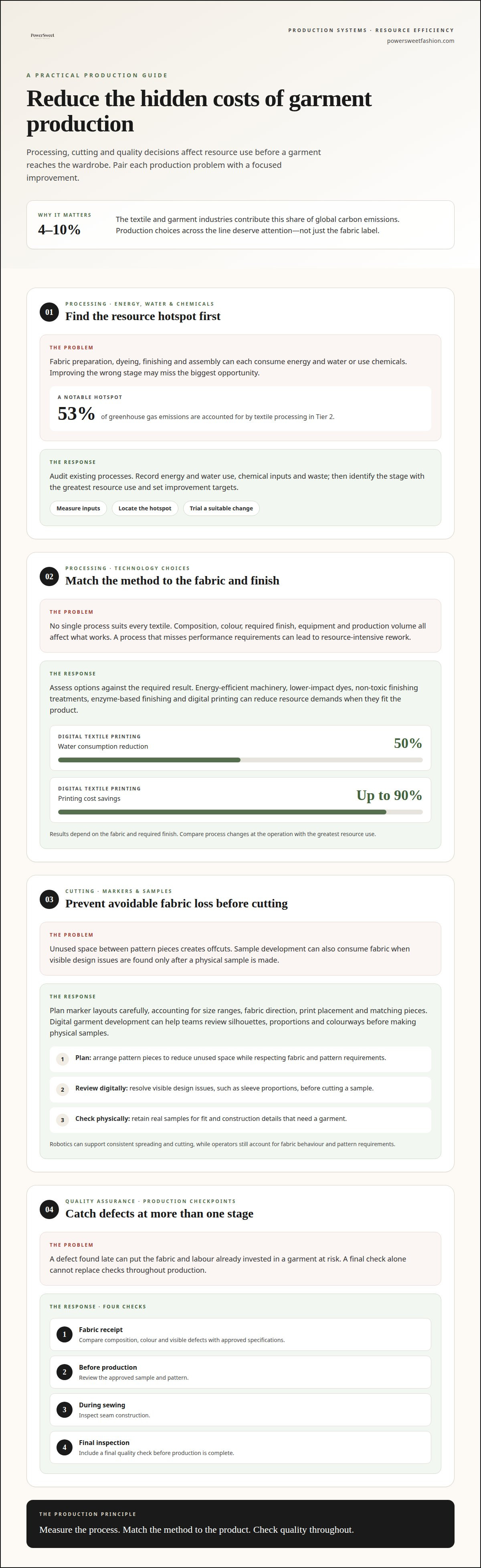
Cutting waste and quality assurance
Plan fabric use before cutting. Pattern-marker planning arranges garment pieces across the fabric width to reduce unused space between pattern shapes. A shirt marker, for example, must account for size ranges, fabric direction, print placement, and matching pieces. Robotics can support consistent spreading and cutting, but operators still need to account for fabric behavior and pattern requirements. Precise placement affects both usable yield and garment fit.
Sample development can also generate avoidable fabric waste. Digital garment development lets teams review silhouettes, proportions, and colourways before making physical samples. Resolve visible design issues during that review, then make physical samples to check fit and construction. For example, adjust a sleeve proportion digitally before cutting a sample in organic cotton or polyester. This can reduce unnecessary sample iterations where appropriate, while retaining physical checks for details that require a real garment.
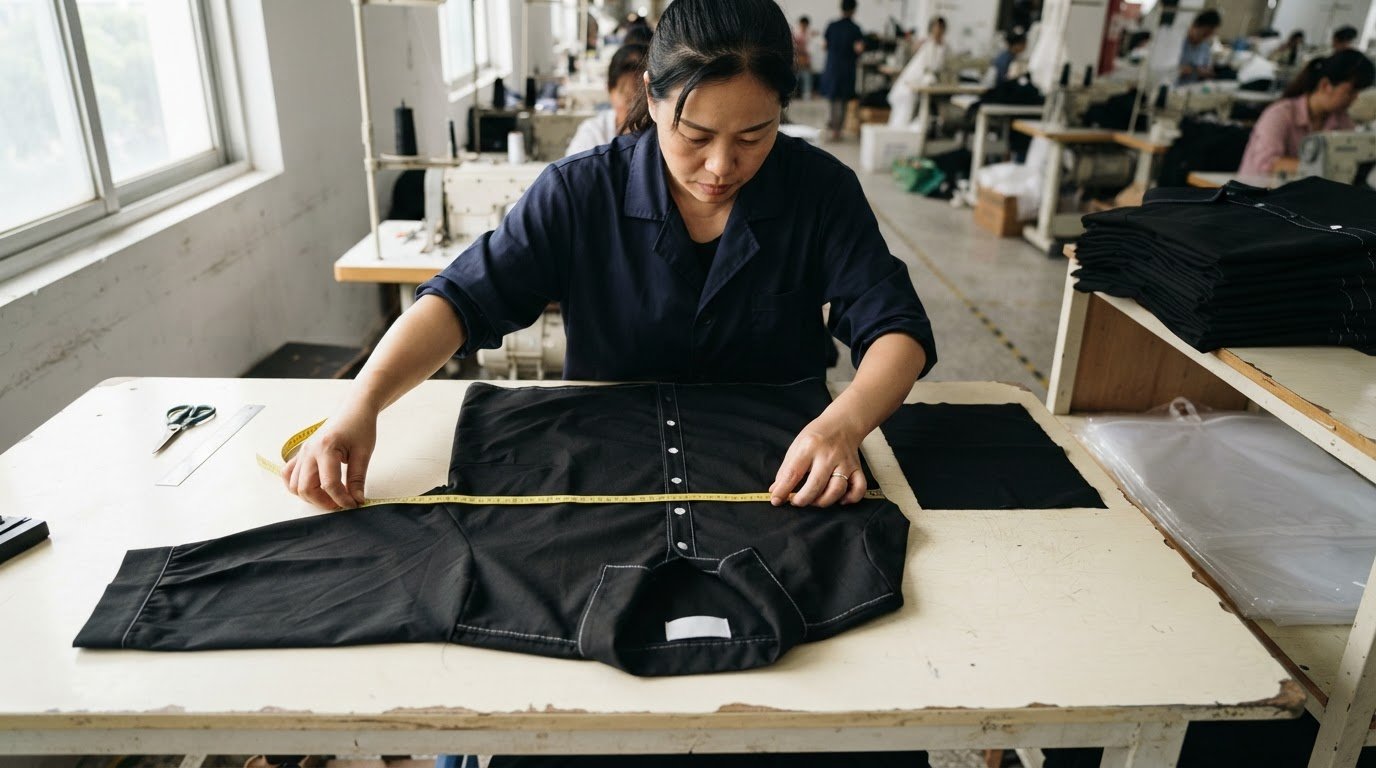
Quality assurance protects the fabric and labor invested in production. Check quality when fabric arrives, before production, during sewing, and at final inspection. On receipt, compare composition, colour, and visible defects with approved specifications. Before production, review the approved sample and pattern. During sewing, inspect seam construction and garment measurements. At final inspection, compare finished clothing with agreed requirements. Catching a defect early can stop it from affecting more pieces.
Use inspection records to connect each finding to a production stage, fabric lot, and corrective action. If a polyester fabric shows inconsistent color, for instance, isolate the affected material before cutting and review the approved color reference. Track recurring defects, then adjust pattern placement, handling, or sewing controls as needed. These checks support environmental goals by preventing avoidable rework and discarded garments. They also make ethical production more practical, since careful planning reduces wasted material and effort across the manufacturing process.
Fair labor practices and social standards
Garment sustainability includes the people who cut, sew, dye, and finish clothing. Safe working conditions, lawful working hours, and fair employment practices are fundamental to responsible manufacturing. The Fair Wear Foundation (FWF) and Ethical Trading Initiative (ETI) focus on sustainability. Their names can inform social responsibility discussions, but do not show on their own how a particular workplace operates.
Begin with the production site and the work carried out there. Review safety practices in cutting, sewing, dyeing, and finishing areas. Consider whether workers have clear information about their roles, working hours, and employment terms. Connect each production stage to the people doing the work, rather than treating labor as an abstract supply-chain issue. Organize findings by facility and process so relevant production partners can address recurring concerns.
Traceability supports this review. Record manufacturing locations, supplier relationships, and production controls alongside material documentation. An organic cotton claim, for example, describes a material, not the employment practices involved in making a garment. Keep these lines of evidence distinct: material records explain sourcing, while workplace information addresses labor conditions. Clear records connect social expectations to the actual steps in a garment’s supply chain.
Ethical labor practices also influence production planning. Better demand planning can reduce rushed changes that disrupt schedules, while durable design can support longer garment use. Circular models and textile-reuse innovation add another dimension, but do not replace safe conditions or fair employment. Set social expectations alongside quality and material requirements, then review them when production details change. This makes responsibility part of everyday manufacturing decisions, not just a statement of values.
For brands developing women’s apparel, custom clothing production planning can bring design specifications and manufacturing decisions into the same conversation.
PowerSweet Fashion: Custom Women's Clothing Production
PowerSweet Fashion helps apparel brands turn women’s clothing designs into production-ready garments. Its production service brings together fabric sourcing, sample development, and quality control, so material choices can be considered alongside fit and construction requirements.
Brands can bring a design or production plan to PowerSweet Fashion when they need support moving from concept to finished garments. The company offers low minimum order quantities, samples ready in 10 days, and bulk production in 15-20 days. Sample development gives teams a physical reference for reviewing design details before bulk production, while quality control services support inspection during manufacturing.
For a coordinated path from fabric selection to finished women’s apparel, contact PowerSweet Fashion or visit powersweetfashion.com.
Turn sustainability priorities into production decisions
Turn your sustainability priorities into clear requirements for your next collection. Identify what matters most to your brand, then document it alongside design, fabric, construction, and inspection specifications. A focused brief keeps those priorities visible as a garment moves from concept to production.
Sustainable garment processing is an ongoing way to make and review decisions, not a label to apply at the end. As your products and sourcing plans evolve, revisit your criteria and record lessons from each production cycle. This creates a practical basis for improving future decisions while keeping fit, function, and the people behind the work in view.
If you’re ready to discuss how your women’s apparel project can move from design requirements into production, contact PowerSweet Fashion. Start with the priorities that matter to your brand and build from there.
Frequently Asked Questions
What is sustainability in the clothing industry?
Sustainability in clothing means considering environmental and social effects throughout a garment’s life, from raw materials to use and disposal. Brands need to assess how a product is made, how long it performs, and what happens after customers stop wearing it. For example, weigh a garment’s care needs and expected lifespan alongside its materials and production methods.
What is sustainable garment processing?
Sustainable garment processing means making and finishing clothing with attention to resource use, waste, product quality, and worker conditions. It involves connected production decisions, not just one material or machine. For example, consider whether a fabric’s dyeing and finishing requirements suit the garment, then keep production records that explain those choices and inform improvements in later runs.
How do low-impact dyes and chemical alternatives compare with conventional textile processing?
Lower-impact dyes and chemical alternatives aim to reduce processing burdens while meeting the fabric’s required colour, performance, and finish. Their suitability depends on fibre, shade, process controls, and product specifications. Compare options using sample results and production records, including colour consistency, fastness, and finishing performance. A dye that fails these requirements can lead to reprocessing or rejected fabric.
What U.S. regulations govern chemicals, wastewater, and emissions in garment processing?
U.S. requirements depend on the chemicals used, facility processes, and how wastewater and emissions are managed. Start by mapping dyeing, washing, finishing, chemical storage, wastewater discharge, and fuel or equipment emissions by site. Keep chemical inventories and process records with facility documentation. This provides a clearer basis for identifying the requirements that apply to each operation and location.
What certifications and standards apply to sustainable garment processing?
Standards differ in scope: some address material claims, while others cover production practices or workplace conditions. The Global Organic Textile Standard (GOTS) is one sustainability standard for textiles. Before relying on a certification, match its stated scope to the claim, such as fibre content or processing. Keep supporting supplier and transaction records linked to the relevant material or production batch.
How can garment processors measure water, energy, chemical use, and carbon emissions?
Build a useful baseline by recording water and energy consumption, chemical inputs, and production output for each facility or process. Use meter readings and utility records where available, and link chemical logs to production batches. Track results against a consistent unit of output, such as garments or fabric weight. For carbon accounting, combine energy and fuel activity data with suitable emissions factors, then compare periods consistently.


Comments